- Published
- Reading time
- 5 min
- Topic
- SEO
On this page
- 01What Is Organization Schema?
- 02Why Organization Schema Matters More in 2026
- 03How Organization Schema Connects to Brand Entity SEO
- 04Key Properties to Include in Your Organization Schema
- 05Essential Properties
- 06Recommended Properties
- 07JSON-LD Implementation: The Modern Standard
- 08Organization Schema vs. Corporation Schema: Which to Use?
- 09Testing Your Organization Schema
- 101. Schema.org Validator
- 112. Google Rich Results Test
- 123. URL Inspection in Search Console
- 13Common Organization Schema Mistakes to Avoid
- 14How Organization Schema Supports AI Search Visibility
- 15Organization Schema and E-E-A-T Signals
- 16Best Practices Checklist
- 17Frequently Asked Questions
- 18External Resources
- 19Sources
In 2026, with AI search evolving faster than ever, properly implemented Organization schema isn’t just nice-to-have. It’s essential for any brand that wants to stand out in search results and AI-powered answers.
Adding Organization schema to your homepage helps Google understand your brand identity, disambiguate your business from competitors, and can even unlock sitelinks in search results. This guide covers everything you need to know to get it right.
What Is Organization Schema?
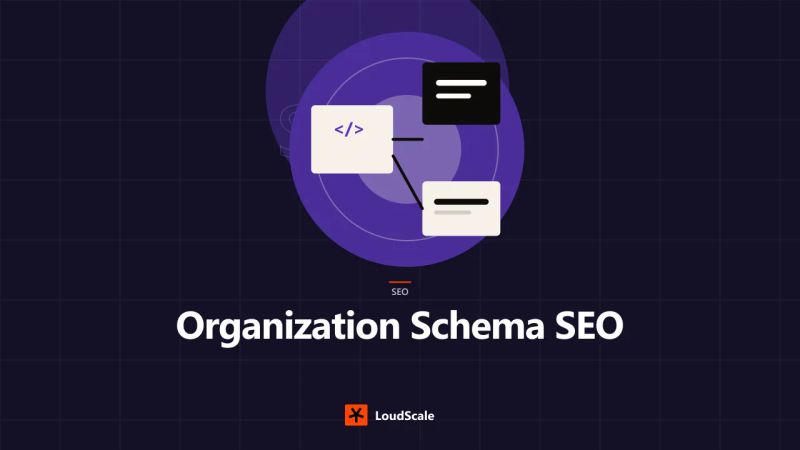
Organization schema is a type of structured data markup you add to your website’s HTML. It tells search engines exactly who your organization is, what it does, and how to reach you.
Unlike regular text on a page that humans read, schema markup provides machine-readable data that Google and other search engines can parse and understand instantly. Think of it as giving search engines a perfectly formatted business card that they can’t misread or misinterpret.
Google recommends using the most specific Schema.org subtype for your organization. If you’re an ecommerce store, useOnlineStore. If you run a restaurant with physical locations, useRestaurant or another specific LocalBusiness subtype. The more specific you are, the better Google understands and represents you.
The key properties Google recognizes include your organization’s name, address, contact information, logo, website URL, and social media profiles. There are no required properties per se, but adding as many relevant properties as possible dramatically improves how Google displays your brand in search results.
Why Organization Schema Matters More in 2026
Here’s the uncomfortable truth: in 2026, if you’re not using Organization schema, you’re invisible to AI search systems trying to understand who you are.
Pages with properly implemented structured data earn 35% higher click-through rates through rich results in Google Search, yet most sites either skip it entirely or implement it incorrectly. Organization schema tells AI systems not just what you sell, but that you exist as a legitimate, verifiable entity in the real world.
Google’s Knowledge Panels don’t just happen by magic. They form when Google can confidently connect your website, your social profiles, your physical address, and your brand name into a coherent entity. Organization schema is often the missing puzzle piece that triggers these panels.
Pro tip: Knowledge Panels increase branded search CTR by 30-40% according to recent case studies. If you’re not showing up in one, you’re losing clicks to competitors who are.
How Organization Schema Connects to Brand Entity SEO
Brand entity SEO is about making Google understand your brand as a distinct, verifiable entity. Organization schema is the foundation of that work.
When Google’s Knowledge Graph recognizes your organization as an entity, it can:
- Show your brand information in Knowledge Panels
- Display sitelinks under your search result
- Include your brand in AI Overviews and answer generation
- Better disambiguate your brand from competitors with similar names
ThesameAs property is your secret weapon here. Every verified social profile you link in your schema tells Google these profiles belong to the same entity. Over time, this builds a coherent entity signal that search engines trust.
Key Properties to Include in Your Organization Schema
Not all schema properties are created equal. Based on Google’s official documentation and industry best practices, here are the properties that matter most:
Essential Properties
- name – Your organization’s official name
- url – Your website’s homepage URL
- logo – URL to your logo image (minimum 112x112px)
- address – Complete postal address with street, city, country, postal code
- contactPoint – Phone number and email for customer service
- sameAs – URLs to all your official social media profiles
Recommended Properties
- description – A detailed description of your organization
- foundingDate – When your organization was established
- legalName – Official registered legal name (if different from common name)
- vatID – VAT identification number (builds trust with international customers)
- iso6523Code – Your organization’s ISO 6523 identifier
- numberOfEmployees – Size of your organization
- alternateName – Other names your organization is known by
“We recommend focusing on properties that are useful to your users, such as name or alternateName for your business name as well as an indication of real-world presence (for example, address or telephone) and online presence (for example, url or logo).”
JSON-LD Implementation: The Modern Standard
JSON-LD is Google’s recommended format for structured data. It’s easiest to read, write, and update without interfering with your existing website’s HTML. Here’s a complete example:
<script type="application/ld+json">
{
  "@context": "https://schema.org",
  "@type": "Organization",
  "name": "Your Company Name",
  "url": "https://www.yourcompany.com",
  "logo": "https://www.yourcompany.com/images/logo.png",
  "description": "A brief description of what your company does.",
  "address": {
    "@type": "PostalAddress",
    "streetAddress": "123 Main Street",
    "addressLocality": "New York",
    "addressRegion": "NY",
    "postalCode": "10001",
    "addressCountry": "US"
  },
  "contactPoint": {
    "@type": "ContactPoint",
    "telephone": "+1-555-123-4567",
    "contactType": "Customer Service",
    "email": "support@yourcompany.com"
  },
  "sameAs": [
    "https://www.facebook.com/yourcompany",
    "https://twitter.com/yourcompany",
    "https://www.linkedin.com/company/yourcompany",
    "https://www.instagram.com/yourcompany"
  ]
}
</script>
Place this in the<head> section of your homepage. Keeping all your metadata and structured data in one place makes your code more organized and easier to maintain.
Organization Schema vs. Corporation Schema: Which to Use?
Here’s the deal:Corporation is a subtype ofOrganization, but Google doesn’t treat them differently for rich results. What’s more important is choosing the most specific subtype that accurately describes your business.
| Schema Type | Use When | Key Properties |
|---|---|---|
| Organization | General organizations, NGOs, schools, clubs | Basic contact info, social links |
| Corporation | C-corporations, S-corporations, publicly traded companies | Legal name, stock ticker, founding date |
| LocalBusiness | Physical locations with customer visits | Hours, geo-coordinates, reviews |
| OnlineBusiness | Ecommerce stores, virtual services | Shipping policies, return policies |
| Restaurant | Food service businesses | Menu URL, serves cuisine, price range |
For most brands,Organization with comprehensive properties works perfectly. Reserve more specific subtypes when they genuinely describe your business type.
Testing Your Organization Schema
Never deploy schema without testing it first.
1. Schema.org Validator
The official Schema.org Validator checks all schema.org markup, not just Google’s features. Paste your URL or code snippet to verify syntax:
- Look for “0 Errors” and “0 Warnings”
- Fix any critical errors before deployment
- Even warnings can indicate potential issues
2. Google Rich Results Test
The Rich Results Test shows exactly which rich results your page can generate. It verifies:
- Your markup is valid
- Which rich result types you’re eligible for
- Any specific Google-specific issues
3. URL Inspection in Search Console
After deployment, use Google’s URL Inspection tool to see how Google sees your page. Check that:
- Google can crawl and read your structured data
- No robots.txt or noindex is blocking access
- Your page appears correctly in the index
Common Organization Schema Mistakes to Avoid
Don’t let them happen to you:
Mistake 1: Inconsistent information across the web Your schema data must match what appears on your Google Business Profile, social media accounts, and other websites. Inconsistencies confuse Google’s entity resolution and can trigger manual actions.
Mistake 2: Marking up hidden or irrelevant content Only mark up visible, accurate content. Don’t tag placeholder content or anything users can’t actually see on the page. Google explicitly warns against this practice.
Mistake 3: Using the wrong schema type
UsingRestaurant when you’re a consulting firm orLocalBusiness when you have no physical location. Always match your schema type to your actual business model.
Mistake 4: Missing sameAs links This is A mistake to watch for. Your social profiles are your entity credibility signals. Without them listed in schema, you’re not fully connecting your digital presence for Google.
Mistake 5: Forgetting to update schema when information changes When you move offices, change phone numbers, or update your brand name, your schema must reflect those changes immediately. Outdated schema is worse than no schema.
How Organization Schema Supports AI Search Visibility
Here’s something most SEO guides won’t tell you: in 2026, Organization schema is your AI search readiness layer.
AI search engines evaluate entity clarity, factual consistency, and structured signal density. When Perplexity, ChatGPT, or Google’s AI Overviews look for information to cite, they need verifiable facts about your organizationfacts that match across multiple sources.
Your Organization schema provides those facts in a clean, machine-readable format. The more comprehensive your schema, the more confident AI systems become when citing your brand.
Entity identity signals that are consistent everywhere online help AI systems verify who you are and what you do. If your schema says you’re located in Chicago, but your LinkedIn says New York, AI systems will distrust both sources.
Organization Schema and E-E-A-T Signals
E-E-A-T (Experience, Expertise, Authoritativeness, Trustworthiness) isn’t just for content creators. Your organization itself can demonstrate E-E-A-T through structured data.
Here’s how:
- Trustworthiness: Add your
vatID,legalName, andiso6523Codeto prove your business is legally registered - Authoritativeness: Use
sameAsto link all your official social profiles and authority-building references - Expertise: Include
foundingDateand organizational details that establish your industry tenure
Google’s Quality Raters specifically look for these trust signals when evaluating websites. Organization schema helps you pass those checks without requiring human review.
Best Practices Checklist
Before you deploy your Organization schema, run through this checklist:
- Using JSON-LD format (not microdata or RDFa)
- Placed in the
<head>section of your homepage - Includes your official company name matching your branding
- Logo image meets minimum 112x112px requirement
- Complete postal address matches Google Business Profile
- Phone number includes country and area codes
- All social profiles listed in
sameAsproperty - Using the most specific Schema.org subtype
- Information matches across all online properties
- Tested with Schema.org Validator and Rich Results Test
- Deployed and verified via Search Console URL Inspection
Frequently Asked Questions
Can I use Organization schema on every page of my website?
Google recommends placing Organization schema on your homepage or a single “About Us” page. You don’t need to include it on every page. Multiple pages with the same Organization schema can actually cause confusion about which is the primary source.
What’s the difference between Organization and LocalBusiness schema?
Organization is for general organizations without specific physical locations. LocalBusiness is a subtype that includes location-specific properties like opening hours, geo-coordinates, and maps. If you have physical locations customers visit, use LocalBusiness. If you’re purely online, use Organization.
How long does it take for Organization schema to show results?
After publishing, allow several days for Google to crawl and index your page. Once indexed, you might see Knowledge Panels appear within 2-4 weeks for established brands. Newer brands may take longer as Google builds entity confidence over time.
Does Organization schema directly improve rankings?
Organization schema itself is not a direct ranking factor. However, it enables rich results that increase click-through rates, helps Google understand your brand for Knowledge Panels, and supports AI search visibilityall of which can drive more organic traffic.
What happens if my schema information doesn’t match other sources?
Inconsistencies between your schema and other authoritative sources (Google Business Profile, LinkedIn, Wikipedia) can confuse Google’s entity resolution system and potentially trigger manual actions. Always keep your organizational information consistent everywhere it appears online.
External Resources
- Google Search Central: Organization Structured Data
- Schema.org Organization Type Documentation
- Schema.org Validator Tool
- Google Rich Results Test
- Semrush: Organization Schema Implementation Guide
Sources
- Google Search Central, “Organization Schema Markup,” https://developers.google.com/search/docs/appearance/structured-data/organization
- Schema.org, “Organization Type Documentation,” https://schema.org/Organization
- Semrush, “Organization Schema: What It Is & How to Implement It,” https://www.semrush.com/blog/schema-markup-for-company-corporations/
- Search Engine Land, “Organization Schema Explained: Benefits & How to Use,” https://searchengineland.com/guide/organization-schema
- Stackmatix, “Structured Data AI Search: Schema Markup Guide (2026),” https://www.stackmatix.com/blog/structured-data-ai-search
- Digital Applied, “Schema Markup After March 2026: Structured Data Strategies,” https://www.digitalapplied.com/blog/schema-markup-after-march-2026-structured-data-strategies
- LinkFlow, “Google Knowledge Panel Optimization,” https://linkflow.ai/blog/google-knowledge-panel-optimization/
- Semrush, “AI Search Trust Signals: The Practical Audit (2026 Guide),” https://www.semrush.com/blog/ai-search-trust-signals/
Free tools
All tools- Website Growth GraderFlagship free growth grade score before email.
- SEO Checker40+ live HTML checks on any public URL.
- AI Visibility ReadinessAnswer-engine readiness and extractability.
Diagnostics show a useful score before email. Explore LoudScale services when you want a full plan and implementation.
Written by the team
LoudScale Team
Growth Marketing Specialists
The LoudScale team shares practical strategies, research analysis, and evidence-backed guidance across search and AI visibility, content authority, B2B lead generation, lifecycle systems, analytics, and responsible AI.