TL;DR
- Content marketing generates three times more leads than outbound marketing at 62% lower cost, according to the Content Marketing Institute. But only 29% of marketers with a documented strategy rate it as very effective [1].
- The playbook that worked in 2022 doesn’t work in 2026. Ninety-seven percent of content programs now use AI, 91% of businesses use video as a core marketing tool, and AI answer engines like ChatGPT and Perplexity are reshaping how content gets discovered [2][3].
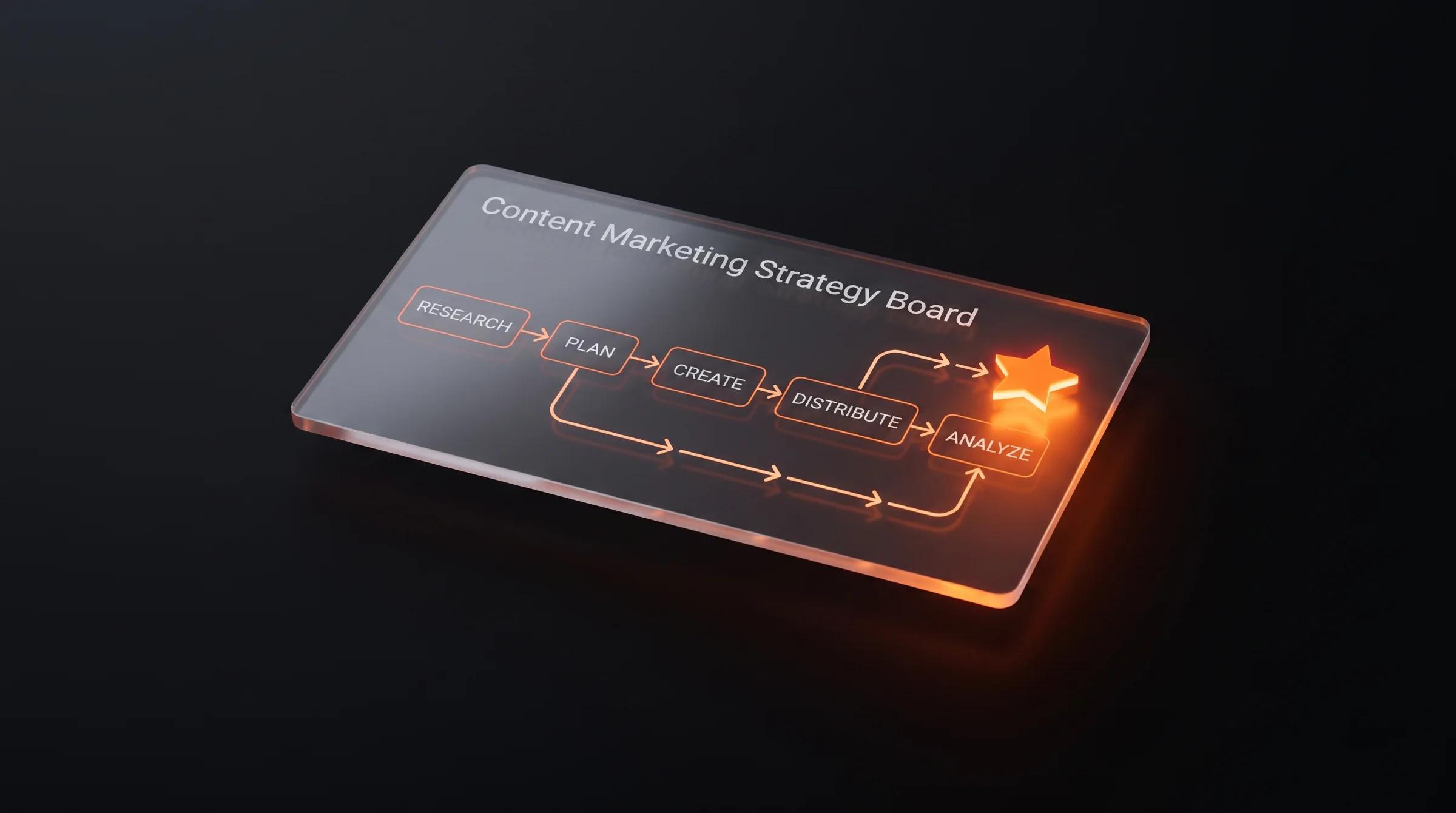
- The Content-Market Fit framework breaks the first 90 days into three phases: Listen, Test, Scale. The order matters more than any single tactic. Start with audience research, then distribution, then content. Not the other way around.
I watched a founder burn $18,000 on content marketing in her first three months. Forty-something AI-generated blog posts. A Notion editorial calendar her team never opened. Templates for every platform. Total leads from those three months? Six.
Her problem wasn’t effort. Her problem was sequencing. She built a publishing engine before figuring out who she was talking to or how she’d reach them.
The Content Marketing Institute’s 2026 research confirms this is still the norm. Only 29% of marketers with a documented strategy rate it as very effective [1]. That means roughly seven in ten people know they should do content marketing, have a plan, and are still disappointed with the results.
This article won’t give you another 10-step checklist. Instead, I’ll walk you through the Content-Market Fit framework: a 90-day approach that prioritizes listening over creating. You’ll learn what to do in each phase, what to skip, and why the standard advice floating around LinkedIn puts beginners on a fast track to expensive disappointment.
Why Most Content Marketing Programs Still Fail in 2026
They fail because the game changed faster than the advice did.
In 2022, you could pick a keyword, write a decent blog post, and wait for Google to send traffic. In 2026, three things have made that approach dangerous.
First, AI-generated content has flooded every channel. Ahrefs research shows that 86.5% of top-ranking pages now contain some amount of AI-generated content, and 74% of new web content is produced with generative AI [4]. If you’re publishing generic blog posts, you’re competing against an infinite supply of mediocre content that costs 4.7x less to produce.
Second, AI answer engines are replacing traditional search. HubSpot’s 2026 State of Marketing report found that 31% of Gen Z users now reach for AI chatbots before Google when they need information. Nearly 30% of marketers reported decreased search traffic as consumers turn to AI tools [2].
Third, video has become the non-negotiable content format. Short-form video now delivers the highest ROI among all content formats, cited by 49% of marketers. A full 91% of businesses use video as a marketing tool in 2026, and 52% of content marketers are shifting budget toward video and multimedia [3][5].
Despite all this disruption, the fundamentals of audience-first content marketing are more important than ever. Joe Pulizzi, founder of the Content Marketing Institute, told Forbes in March 2026: “People don’t want to follow brands. They want to follow individuals.” His advice for 2026: build a “trust portfolio” by letting authentic voices within your organization create content as individuals, not as a faceless brand [6].
Content-Market Fit borrows from the product world. It’s the point where your content consistently reaches a specific audience, through a specific channel, with messages they’re already looking for. You find it through research, not guesswork.
The Content-Market Fit Framework: 3 Phases, 90 Days
Here’s the framework I’ve used with teams ranging from solo operators to 15-person content departments. Each phase builds on the one before it.
| Phase | Timeframe | Focus | Primary Output |
|---|---|---|---|
| Phase 1: Listen | Days 1–30 | Audience research, competitor content gaps, channel selection, AEO readiness | Audience profile document + 25 validated topics + 1 chosen channel |
| Phase 2: Test | Days 31–60 | Publish minimum viable content, build distribution, gather real-world signals | 8–12 published pieces across 2 formats + 1 active distribution channel |
| Phase 3: Scale | Days 61–90 | Double down on winners, cut the rest, build repeatable systems | Editorial workflow + measurement dashboard + 1 owned audience channel |
Two things separate this from the standard advice. First, you don’t publish anything until Day 31. Second, distribution is treated as the foundation, not a footnote. Most guides say “create great content and promote it.” That’s like telling someone to “make delicious food and people will come.” Technically true and completely useless.
Phase 1 (Days 1–30): Listen Before You Type a Single Word
The first 30 days earn you the right to create content later. Skip this phase and everything downstream suffers.
Here’s what you actually do:
1. Pick one audience segment, not five. If you sell project management software, don’t target “remote teams.” Target “marketing managers at B2B SaaS companies with 20–100 employees who manage freelancers.” The narrower you go, the easier everything else becomes. You can always expand. Very few beginners go narrow enough.
2. Go where your audience already talks. Spend ten hours minimum reading Reddit threads, LinkedIn comment sections, Quora questions, Facebook groups, and customer support tickets. Screenshot the exact language people use. Not the jargon you think they use. The words they type at 11 p.m. when they’re frustrated. When you eventually write content, this language becomes your raw material.
3. Audit your top five competitors’ content. Not their homepage. Their blog, YouTube channel, LinkedIn posts, and email newsletter. What topics consistently get engagement? What questions are they weirdly silent on? The gaps are your opening. CMI research confirms that content relevance and quality are the single biggest factors that improve B2B content marketing performance [7].
4. Build a list of 25 validated topics. “Validated” means real people are searching for answers or asking about this in communities. Use free tools like Google Keyword Planner or Ubersuggest. If nobody’s looking, don’t write. A Topic Validation Template can help structure this process. [Internal Link: /tools/content-topic-validator]
5. Choose ONE primary distribution channel. One. Not four. LinkedIn if your audience lives there professionally. SEO if you’re playing a longer game and your topics have search volume. Email if you already have 500+ contacts. The Reddit community’s consensus in a January 2026 thread was clear: “Depth beats novelty. Pick one distribution channel, publish consistently, then build one genuinely useful asset that keeps paying rent” [8].
6. Prepare for AI-powered search. This is the new step that didn’t exist in 2024 guides. Generative Engine Optimization (GEO) or Answer Engine Optimization (AEO) means structuring your content so AI engines like ChatGPT, Perplexity, and Google AI Overviews can read, extract, and cite it. The good news: content built for real humans already aligns with what AI engines want. Write clear answers. Use structured formatting. Cite specific data with named sources [9].
The biggest trap in Phase 1 is research paralysis-spending 80 days researching and never publishing. Set a hard deadline. Day 30, the research is done whether it feels “complete” or not. Done beats perfect every time.
Why does all this matter? Because content marketing generates three times the leads of outbound at 62% less cost, but only if you’re reaching the right people with the right message through the right channel. Strip away any of those three and you’re just making noise [1].
Phase 2 (Days 31–60): Publish Fast, Learn Faster
Here’s where the standard advice gets it dangerously backwards. Traditional guides tell you to build a detailed editorial calendar, design brand templates, set up a CMS, and write a style guide before publishing. That’s procrastination in professional clothing.
During Phase 2, you’re not creating masterpieces. You’re running experiments to find Content-Market Fit. Every piece is a data point.
Last year, I ran this exact playbook for a B2B SaaS client. We published eleven pieces in 30 days across blog posts and LinkedIn content. Three flopped completely. Four were average. But one deep-dive into how their industry calculated a specific compliance metric generated more qualified leads than their previous quarter’s entire content strategy. We never would have found that topic through brainstorming. The audience told us.
Your Phase 2 checklist:
1. Publish 8–12 pieces in 30 days across at least two formats. A 600-word LinkedIn post counts. A 1,500-word blog post counts. A 2-minute video counts. Don’t obsess over polish. With 91% of businesses now using video and short-form video driving the highest ROI, you should include at least some video content in this batch-even if it’s a simple talking-head format on your phone [3][5].
2. Start with your best guesses from Phase 1 research. From those 25 validated topics, publish the eight that felt most urgent based on community language and search behavior.
3. Distribute every piece at least twice. Post on your chosen primary channel. Then repurpose a snippet for a secondary channel. HubSpot’s 2026 data shows that 48% of social media marketers adapt content for each platform rather than copy-pasting [2]. The teams tailoring content per platform consistently outperform the copy-paste crowd.
4. Track three metrics, only three. For SEO: organic impressions, click-through rate, time on page. For social: engagement rate, saves or shares, and DMs or comments signaling purchase intent. For email: open rate, click rate, replies. Vanity metrics like page views will lie to you. Jill Grozalsky Roberson of Velir x Brooklyn Data put it bluntly for CMI: “Content marketers who still rely on intuition and vanity metrics will get left behind” [10].
5. Use AI correctly during Phase 2. Use it. But use it as a drafting tool, not a publishing tool. Siege Media’s 2026 survey of 353 content marketers found that 97% of programs now use AI, but 48% use it only for 11–40% of their work-mostly for ideation, outlining, and editing. Only 1% publish 100% AI-generated content [11]. Sixty-one percent of marketers agree that when AI content is everywhere, brands with a genuine human point of view will rise to the top [2]. AI helps you draft faster. Your experience, opinions, and specific audience language make the content worth reading.
“Being human is the number one asset you’ll have in content creation. We will all become more efficient at creating AI-generated content, but we won’t get better at creating more human content unless you, the human, are involved.”
- A. Lee Judge, Cofounder and CMO, Content Monsta [10]
Phase 3 (Days 61–90): Double Down, Cut Ruthlessly, Build the Machine
By Day 60, you have actual data. Not intuition. Not what “feels right.” Real signals from real people.
Look at your results honestly. Which two or three topics drove the most meaningful engagement? Not page views-actions. Email signups. Demo requests. Inbound inquiries. Substantive comments. Those topics become your content pillars: the themes you’ll build around for the next six months.
Everything else? Kill it. I know it hurts. You spent time on those posts. But content marketing compounds when you go deep, not wide. Publish fewer, better pieces. Eighty-three percent of marketers agree quality beats quantity every time [4].
Now, take your best-performing topic and turn it into something bigger. A definitive guide. A free template. A short email course. An explainer video series. This becomes your anchor asset-the single piece that drives the most traffic, backlinks, and conversions over time. With 86% of marketers planning to increase proprietary research budgets in 2026, original data is increasingly the differentiator that separates anchor content from filler [12].
Your Phase 3 checklist:
1. Create a repeatable editorial workflow. Who writes? Who edits? Who publishes? Who promotes? Even if the answer to all four is “me,” write it down. Documented workflows survive bad weeks. Use the Content Operations Checklist to get started. [Internal Link: /templates/content-operations-checklist]
2. Set up a simple measurement dashboard. Google Analytics, Google Search Console, and your email platform’s built-in analytics cover 90% of what a beginner needs. Don’t buy expensive tools yet. Companies that consistently measure content performance see dramatically better ROI [13].
3. Plan your next 30 days of content around your winning pillars. Not 90 days. Not a year. Thirty days. Plans stretching further than 30 days are fantasies that collapse the moment reality intervenes.
4. Build one owned audience channel. An email list. A newsletter on LinkedIn or Substack. Something you control. Social followers can vanish overnight if an algorithm changes. Email subscribers are yours. Start capturing them from Day 61 with a simple promise: “Get one actionable marketing insight every Tuesday.”
5. Make your content AI-search-ready. For the anchor asset you built, ensure it directly answers specific questions, uses structured formatting like headers and lists, cites verifiable data with named sources, and includes clear author attribution. AI answer engines reward content that a human (or another AI) can instantly understand and cite [9].
What Most Beginner Guides Get Dangerously Wrong
Nearly every “how to start content marketing” guide tells you to “create valuable content.” That advice is correct and completely useless. It’s like telling someone learning to cook to “make delicious food.”
Here are the three mistakes I’ve watched wreck early-stage content programs.
Mistake 1: Treating content like advertising with extra steps. Content marketing isn’t a campaign. It’s a compounding asset. Campaigns have end dates. Content marketing works more like compound interest. Small returns early. Enormous returns later. First Page Sage’s research tracked a 3-year average ROI of 748% for B2B SEO-driven content, with Year 1 returns averaging 367% [14]. If you evaluate content on a 90-day timeline, you’ll always be disappointed.
Mistake 2: Creating content for search engines from 2023. Half of the advice about SEO in beginner guides hasn’t been updated for AI search. Google’s AI Overviews now appear on 21% of keyword searches. AI search platforms prefer to cite content that is 25% fresher than what traditional organic results surface. And 31% of Gen Z now uses AI chatbots as their primary information tool [4][2]. Write for humans first. Structure for AI second. The two goals overlap more than you’d think.
Mistake 3: Ignoring distribution until after publishing. I’ve audited too many content programs that had 50+ published blog posts and zero promotion plan. New sites can wait six to twelve months before meaningful search traffic arrives. During that wait, you need active distribution: sharing in communities, emailing people who’d find it useful, mentioning pieces in conversations. Distribution isn’t optional, especially in Year 1.
A Quick Note on AI Tools (Because Everyone Asks)
Should you use AI when you’re starting out? Yes, with guardrails.
Think of AI as an intern who has read everything on the internet but has never had a real job. Excellent for research summaries. Great for outlining. Useful for generating rough first drafts you’ll heavily rework. Terrible for original insights, personal experience, or the kind of nuanced takes that make people keep reading.
A. Lee Judge of Content Monsta couldn’t have said it better for CMI: “Being human is the number one asset you’ll have in content creation” [10]. The 97% of content teams now using AI aren’t publishing AI output directly. They’re using AI for the 20% of creation that’s tedious and keeping the 80% that makes content worth reading: their opinion, their experience, their audience’s specific language, their data [11].
Frequently Asked Questions About Starting Content Marketing
How much does content marketing cost for a solo marketer or small business?
Content marketing costs vary wildly. A solo operator can start near-zero using free tools like Google Keyword Planner, Canva, and WordPress. If you hire an agency, expect to spend between $2,500 and $10,000 per month for mid-market retainers, with full-service content programs running $10,000 to $25,000 or more. Content marketing generates three times the leads of outbound at 62% lower cost, so the real investment is time-roughly 10–15 hours per week for a solo operator following this 90-day framework [1][15].
How long before content marketing shows results?
Early signals like engagement and small traffic bumps typically appear within 30–60 days if you’re distributing actively. Meaningful business results like leads and revenue take three to six months. Content marketing is a compounding investment, not a quick-hit tactic. First Page Sage’s data shows Year 1 ROI averages 367% for B2B companies, climbing to 748% by Year 3 [14]. Faster results come from formats like short-form video, which delivers ROI 49% faster than text-based content [13].
Should I start with blog posts, video, social media, or email?
Start with whatever format you can produce consistently without burning out. The Reddit community’s overwhelming consensus: pick one format, one channel, and go deep before expanding [8]. That said, short-form video delivers the highest ROI according to 49% of marketers in HubSpot’s 2026 data, while blogs and SEO remain the top channels for B2B [2][5]. Match the format to your audience’s behavior, not the latest trend.
For more detailed format comparisons, see our Content Format Selection Guide. [Internal Link: /guides/content-format-selection]
Do I need a documented strategy before I start?
You don’t need a 20-page strategy document. You need a one-pager answering four questions: Who is my specific audience? What 3–5 topics will I cover? Where will I distribute? How will I measure success? Having any documented strategy dramatically improves results versus having none. CMI data consistently shows that marketers with a written plan outperform those without one, even when the plan is simple [1].
How do AI answer engines change content marketing for beginners?
AI engines like ChatGPT, Perplexity, and Google AI Overviews prefer content that directly answers specific questions, uses structured formatting like headers and tables, cites verifiable data with named sources, and demonstrates genuine expertise through clear author attribution. HubSpot’s 2026 report found 92% of marketers plan to maintain or increase SEO optimization for both traditional and AI-powered search [2]. For beginners: write clearly, answer questions in your opening sentences, include specific data with real attributions, and ensure your content is factually accurate. The strategies that create good content for humans naturally align with what AI engines want to surface [9].
The Real Starting Line
Content marketing isn’t mysterious. It’s a system. Audience understanding feeds content creation, which feeds distribution, which feeds measurement, which feeds better content. The loop compounds. But it only works if you start in the right order.
Most people start by creating. Start by listening. The first 30 days of doing zero writing and all research will feel unproductive. It’s not. It’s the most productive thing you’ll do all year-because every piece of content you create after that research will land harder.
Whether you hire help or do it yourself, remember: the right order beats the right volume every time. Listen, test, scale. Ninety days. That’s your starting line.
If building a content program from scratch feels overwhelming, LoudScale specializes in launching content engines for growing B2B businesses. See how we work at loudscale.com.
Sources
- Content Marketing Institute - Content Marketing Statistics. Accessed May 2026.
- HubSpot - 2026 State of Marketing Report. Published 2026.
- Wyzowl - Video Marketing Statistics 2026. Accessed May 2026.
- Ahrefs - 105 Content Marketing Statistics for 2026 Planning. Published December 2025.
- HubSpot - 2026 Marketing Statistics, Trends & Data. Accessed May 2026.
- Forbes Advisor - Content Marketing: The Ultimate Guide for 2026. Published March 2026.
- Content Marketing Institute - B2B Content Marketing Trends Research. Published 2025.
- Reddit r/content_marketing - “If you were starting content marketing from scratch in 2026”. January 2026.
- HubSpot Blog - Answer Engine Optimization Trends in 2026. Published May 2026.
- Content Marketing Institute - 42 Experts Reveal Top Content Marketing Trends for 2026. Published December 2025.
- Siege Media - 7 Content Marketing Trends Shaping 2026. Published February 2026.
- Typeface - 50+ Content Marketing Statistics to Watch 2026. Published February 2026.
- Genesys Growth - 45 Content Marketing ROI Statistics Every Marketing Leader Should Know in 2026. Published February 2026.
- First Page Sage - Content Marketing ROI Statistics by Industry. Updated 2026.
- Column Five Media - Content Marketing Agency Pricing: What to Expect in 2026. Published May 2026.
- Website Growth GraderFlagship free growth grade score before email.
- SEO Checker40+ live HTML checks on any public URL.
- AI Visibility ReadinessAnswer-engine readiness and extractability.
Diagnostics show a useful score before email. Explore LoudScale services when you want a full plan and implementation.

LoudScale Team
Growth Marketing Specialists
The LoudScale team shares practical strategies and experiments across search and AI visibility, content authority, B2B lead generation, lifecycle systems, analytics, and responsible AI.