<! ANGLE: Most landing page SEO articles treat ranking and converting as a single-page problem, recycling the same on-page checklist. MY article argues that’s exactly why most SEO landing pages convert at a dismal 2.4% from organic traffic, and introduces a two-page architecture (SEO feeder + conversion closer) backed by the latest NavBoost engagement data, Ahrefs’ updated AI Overview CTR study (Feb 2026), and Unbounce’s reading-level findings. The Google May 2026 Core Update, currently rolling out, doubles down on user satisfaction signals-meaning a page that converts well IS a page that ranks well. >
TL;DR
- SEO landing pages convert at a dismal 2.4% from organic traffic, per First Page Sage’s data, because they try to rank and convert on the same page. Paid/email traffic converts at 6.6%, per Unbounce.
- Google’s May 2026 Core Update, rolling out since May 21, doubles down on user satisfaction signals. NavBoost-Google’s system using 13 months of Chrome interaction data-is confirmed as one of its strongest ranking signals. A page that converts well IS a page that ranks well.
- AI Overviews now slash organic CTR by 58% for position one, per Ahrefs’ February 2026 update. Informational landing pages are getting destroyed. Transactional pages are safer.
- A two-page architecture (SEO feeder → conversion closer) lets you rank for informational keywords and convert transactional visitors without forcing one page to do both jobs.
- Landing pages at a 5th-7th grade reading level convert at 11.1%, over double the 5.3% rate of professional-level copy, per Unbounce. Simple copy converts better AND ranks better.
The problem with “SEO-friendly landing pages”
I spent most of 2025 watching a client’s service page climb to position 4 for a 2,000/month keyword. Traffic went up. Revenue didn’t. The page converted at 1.8%.
We’d done everything right: keyword in H1, optimized meta, internal links, 1,500 words of content, fast load. The page ranked. The page didn’t sell.
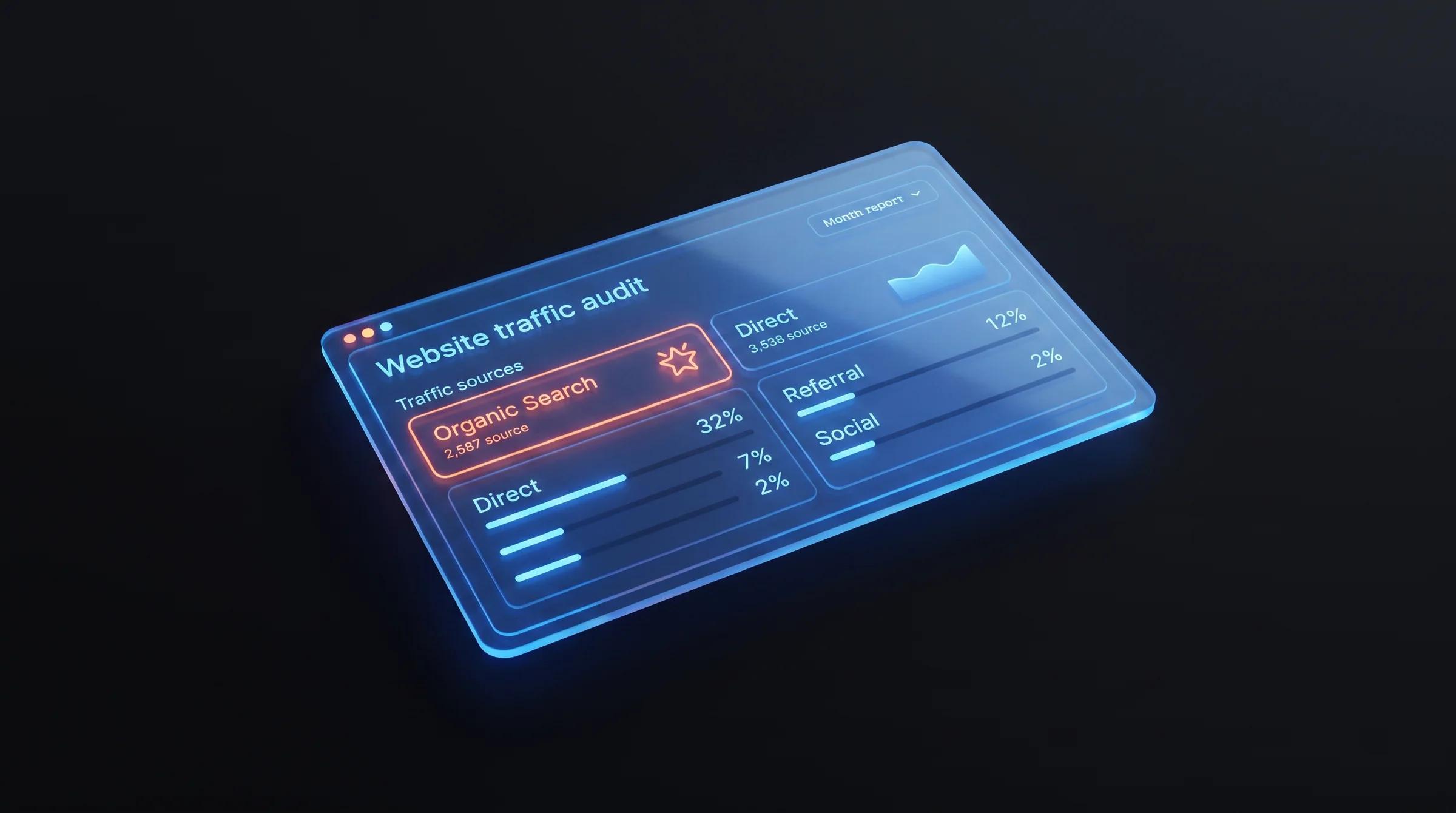
This isn’t a fluke. First Page Sage puts the average SEO conversion rate at 2.4% across all page types. Service pages: 2.7%. Product pages: 2.9%. Roughly 97 out of 100 organic visitors leave without acting. Meanwhile, the median landing page conversion rate with paid and email traffic is 6.6%. Organic visitors arrive with broader intent, more skepticism, less urgency. The page that ranks isn’t naturally the page that closes.
Most landing page SEO advice gets this wrong: it treats ranking and converting as one problem. Stuff keywords into a conversion page, add paragraphs, both goals magically met. That worked in 2019. It doesn’t work now.
Why Google now rewards pages that convert
Google denied using engagement signals for years. Then the 2024 leak happened. The DOJ trial forced testimony. NavBoost was exposed.
NavBoost uses real user-interaction data-clicks, dwell time, return visits-to re-rank search results. It stores 13 months of click data and classifies interactions: “good clicks” where users stay versus “bad clicks” where they bounce. The system specifically rewards the “last longest click”-the final result a user dwells on, signaling a completed task.
“Navboost was confirmed to be one of the important signals that Google uses to refine and prioritise search results based on a massive, historical repository of user interaction data.”
- Shaun Anderson, Hobo Web, April 2026
Then came the May 2026 Core Update. Rolling out since May 21, it’s designed “to better surface relevant, satisfying content.” Early analysis confirms heavier weighting of engagement quality and trust signals. Every signal pushes one direction: pages that genuinely help visitors are the pages Google ranks.
What does this mean? A page where visitors bounce in 3 seconds sends a negative NavBoost signal. A page where visitors scroll, click CTAs, or fill forms sends a positive one. The SEO-vs-CRO conflict is dissolving-but that doesn’t mean slapping SEO onto a conversion page works.
Content depth vs. conversion simplicity
To rank, you need content depth. Google needs text to understand and match your page against queries. Top-ranking landing pages typically have 1,000+ words.
To convert, you need simplicity. Clear headline. Obvious value. One CTA. Unbounce found that 5th-7th grade reading level pages convert at 11.1% versus 5.3% for professional-level copy. Digital Applied’s 2026 form analysis found single-field forms convert at 13.4% while nine-field forms drop to 3.6%.
Depth to rank. Simplicity to convert. How do you serve both on one URL?
You don’t.
The two-page architecture
After that client disaster, I split the job in two.
Page 1: The SEO feeder. A long-form content page targeting informational and commercial investigation keywords-”how to choose a project management tool,” “what to look for in a CRM.” Hosted on your blog, fully indexed, content-rich, built for discovery.
Page 2: The conversion closer. A stripped-down landing page. Minimal nav, clear value prop, one CTA, 300-800 words at 5th-7th grade reading level. It doesn’t need to rank-the feeder sends warm, informed traffic.
The feeder links naturally to the closer: “Ready to apply this? Here’s our [product].” The reader already got value and built trust. By the time they reach the closer, they’re warmer than any cold organic visitor.
Unicorn Platform’s 2026 guide and First Page Sage’s May 2026 B2B report both validate this split-customer-type pages convert at 3.5%, product pages at 2.9%, service pages at 2.7%, while purely informational pages convert lower because they aren’t built to close.
| Page Type | Primary Goal | Content Depth | CTA Intensity | Indexed? |
|---|---|---|---|---|
| SEO Feeder (blog/resource) | Rank for informational + commercial keywords | 1,200-2,500 words | Soft (links to closer, email capture) | Yes |
| Conversion Closer (landing page) | Convert warm visitors | 300-800 words, simple | Hard (demo, trial, purchase, form) | Optional |
| Hybrid (transactional keywords) | Rank AND convert for “buy” intent | 800-1,500 words, balanced | Medium-hard (CTA above fold, content below) | Yes |
The hybrid page works for transactional keywords like “buy project management software.” Put conversion above the fold, SEO content below it.
What AI Overviews change
The Ahrefs February 2026 update is brutal: AI Overviews now reduce organic CTR by 58% for position one, up from 34.5% in April 2025. Position two loses 50.8%, position three 46.4%. Google keeps 58 of every 100 clicks you used to earn. Forbes reports AI Overviews appear on 58% of all Google searches.
Informational traffic is drying up. Google answers the question on the SERP. Fewer people click through.
This makes the two-page architecture even more urgent. Your SEO feeders must target queries AI Overviews can’t fully answer-questions with nuance, comparisons needing context, problems where the answer is “it depends.” Google’s AI can define a term. It can’t walk someone through evaluating your solution. It can’t share your original research or practitioner stories.
Pro Tip: Search your target keyword in incognito mode before building content. If Google gives a complete answer above all organic results, target a more specific, complex variation instead.
Conversion closer pages are safer. Transactional queries (“buy X,” “X pricing,” “sign up for X”) rarely trigger AI Overviews because Google can’t complete a transaction. Your closers are protected. Your feeders need to get smarter.
The on-page checklist that matters
What moves the needle
1. Match title tags to search intent. Informational keyword? Promise insight. Transactional? Signal conversion. A mismatch tanks SERP CTR, which tanks NavBoost signals, which tanks rankings.
2. Write meta descriptions that sell the click. Not the product. The click. Your description competes against 9 blue links and possibly an AI Overview. Give the human a reason to choose your listing.
3. Use heading hierarchy for scanners. H2s and H3s aren’t SEO theater. Visitors scan before committing to read. Clear headings help them find their answer fast, which extends dwell time-the engagement signal NavBoost rewards.
4. Push Largest Contentful Paint under 2.5 seconds. A Deloitte and Google study found 0.1s faster load time lifts conversions 8.4% and spend 9.2%. Digital Applied’s 2026 data shows a 1-second delay cuts conversions 7%. Speed is the rare lever where SEO and CRO align perfectly.
5. Internal-link from your strongest pages. Link to your landing page from your highest-traffic blog posts. This passes authority and sends referral traffic that generates the engagement signals NavBoost tracks.
What you can skip
Keyword density. No magic number exists. Natural copy addressing the topic is sufficient. I’ve seen pages rank with the keyword appearing twice in 1,500 words.
Word count. Orbit Media found no correlation between length and rankings. Write what the topic needs. Don’t pad 600 words to 2,000.
Schema on conversion LPs. Digital Applied’s March 2026 analysis found rich result eligibility narrowed. Spend that time on your headline and CTA.
The mobile gap
83% of landing page visits happen on mobile, but mobile converts roughly 42% worse than desktop-desktop around 4.8%, mobile near 2.8%.
Google uses mobile-first indexing. A poor mobile experience (tiny tap targets, slow load, painful forms) hurts both conversions and rankings.
I audited a B2B SaaS client last fall. Desktop: 4.2% conversion. Mobile: 1.1%. Same pages, same offer. The problem? Seven-field forms on a phone, a hero image pushing the CTA below the fold, 6.3 seconds to interactive on 4G.
We cut forms to 3 fields on mobile, moved the CTA above the fold, lazy-loaded images, compressed the hero. Mobile conversion hit 2.8% in six weeks. Organic rankings improved two positions. NavBoost likely noticed.
Watch Out: “Responsive design” isn’t “mobile-optimized.” Responsive rearranges desktop layouts. Mobile optimization rethinks the entire thumb-on-a-6-inch-screen conversion flow. Different things.
How reading level ties SEO to conversion
This is my favorite finding. Unbounce analyzed 57 million conversions across 41,000 landing pages and found 5th-7th grade reading level pages convert at 11.1% versus 5.3% for professional-level copy. Simple copy doubles conversion.
The correlation between difficult words and declining conversions is now -24.3%, up 62% from -15% in 2020. Complex words hurt worse than ever.
“There is a significant correlation between number of difficult words and declining conversion rates. The data shows a -24.3% correlation.”
Now think about ranking signals. NavBoost rewards dwell time and “last longest clicks.” The May 2026 Core Update emphasizes user satisfaction. Simple copy keeps people reading. Every signal points the same direction.
Most landing pages are still written at 10th-12th grade because the writer wanted to sound “professional.” Stop it. Run your copy through Hemingway Editor. If it scores above 8th grade, shorten sentences, use active voice, one idea per paragraph. Visitors stay longer, conversion rises, Google notices both.
Frequently Asked Questions About SEO for Landing Pages
Do landing pages actually rank on Google?
Yes, but only when the SERP already shows landing-page-style results. Search your keyword and check page one. If you see product pages, service pages, and signup pages ranking, a landing page has a real shot. If page one is dominated by blog posts and guides, your conversion page won’t compete. That’s exactly why the two-page system works-your feeder blog post ranks, and your closer converts the traffic it sends.
Should I noindex my landing pages?
Index pages targeting keywords with real search volume. Noindex pages that exist only for ads, email, or internal referral traffic. Unicorn Platform’s guide recommends indexing only when the SERP already features landing-page-style results and your page answers evaluation questions without losing focus.
How much content does a landing page need to rank?
Enough to fully address searcher intent-no fixed number. Transactional keywords might need 500-800 words with strong trust signals. Comparison keywords might need 1,500+. Orbit Media found no correlation between length and rankings. Match or exceed the depth of what currently ranks, but never pad for padding’s sake.
Can I use the same page for SEO and PPC traffic?
You can, but separate pages usually perform better. PPC visitors match ad intent tightly. SEO visitors arrive with broader intent. A single page compromises for one group. If you’re resource-constrained, build one strong page and test different above-the-fold sections per traffic source.
How do AI Overviews affect landing page strategy?
AI Overviews slash organic CTR by 58%, mostly on informational queries. “What is” and “how does” pages get hit hardest. Transactional and comparison queries are safer. Target keywords with nuance, original data, or purchase intent-queries AI can’t resolve in a summary box.
What does the May 2026 Core Update change?
Google’s May 2026 Core Update (rolling out since May 21) emphasizes user satisfaction, content helpfulness, and trust signals. Pages with strong engagement-measured through NavBoost data like dwell time, scroll depth, and conversions-should benefit. Pages with high bounce rates or thin content will likely suffer.
What to do next
Stop making one page do two jobs. Build SEO feeder content that ranks, then guide visitors to a conversion page built to close. Write both at 5th-7th grade reading level. Mobile-first, not responsive. Internal-link your strongest pages to your money pages. Watch which keywords AI Overviews are eating-and pivot to queries they can’t answer.
If you want a team to handle this, LoudScale builds integrated SEO-to-conversion pipelines. Start with a full SEO and conversion audit, then we’ll architect the feeder-to-closer system that ranks and converts.
The companies that figure out the two-page system now will own 2026. Everyone else will keep wondering why their ranking page doesn’t convert and their converting page doesn’t rank.
Sources
- Ahrefs, “Update: AI Overviews Reduce Clicks by 58%,” February 4, 2026 - https://ahrefs.com/blog/ai-overviews-reduce-clicks-update/
- First Page Sage, “Average SEO Conversion Rate By Page Type,” August 15, 2025 - https://firstpagesage.com/reports/average-seo-conversion-rate-by-page-type-fc/
- First Page Sage, “B2B Landing Page Conversion Rates: 2026 Report,” May 5, 2026 - https://firstpagesage.com/seo-blog/b2b-landing-page-conversion-rates/
- Unbounce, “Conversion Benchmark Report,” 2025 - https://unbounce.com/conversion-benchmark-report/
- Hobo Web (Shaun Anderson), “Navboost: How User Interactions Rank Websites In Google,” April 13, 2026 - https://www.hobo-web.co.uk/navboost-how-google-uses-large-scale-user-interaction-data-to-rank-websites/
- Search Engine Land, “Google May 2026 core update rolling out now,” May 21, 2026 - https://searchengineland.com/google-may-2026-core-update-rolling-out-now-478430
- Digital Applied, “Landing Page Statistics 2026: 120+ Conversion Data,” April 8, 2026 - https://www.digitalapplied.com/blog/landing-page-statistics-2026-conversion-data-points
- Forbes, “Google AI Overviews Are Eating Your Website Traffic,” May 18, 2026 - https://www.forbes.com/sites/terdawn-deboe/2026/05/18/google-ai-overviews-are-eating-your-website-traffic-fight-back/
- Unicorn Platform, “Landing Page SEO in 2026: Best Practices, Examples, and Checklist,” March 23, 2026 - https://unicornplatform.com/blog/seo-for-landing-pages/
- Deloitte & Google, “Milliseconds Make Millions,” 2020 - https://web.dev/case-studies/milliseconds-make-millions
- Orbit Media, “Does Word Count Matter For SEO?” - https://www.orbitmedia.com/blog/does-word-count-matter-for-seo/
- Landing Page GraderGrade headline, CTA, proof, and form friction free.
- Website Growth GraderBroader site growth score before scaling traffic.
- SEO CheckerTechnical and on-page hygiene for campaign URLs.
Diagnostics show a useful score before email. Explore LoudScale services when you want a full plan and implementation.
LoudScale Team
Growth Marketing Specialists
The LoudScale team shares practical strategies and experiments across search and AI visibility, content authority, B2B lead generation, lifecycle systems, analytics, and responsible AI.