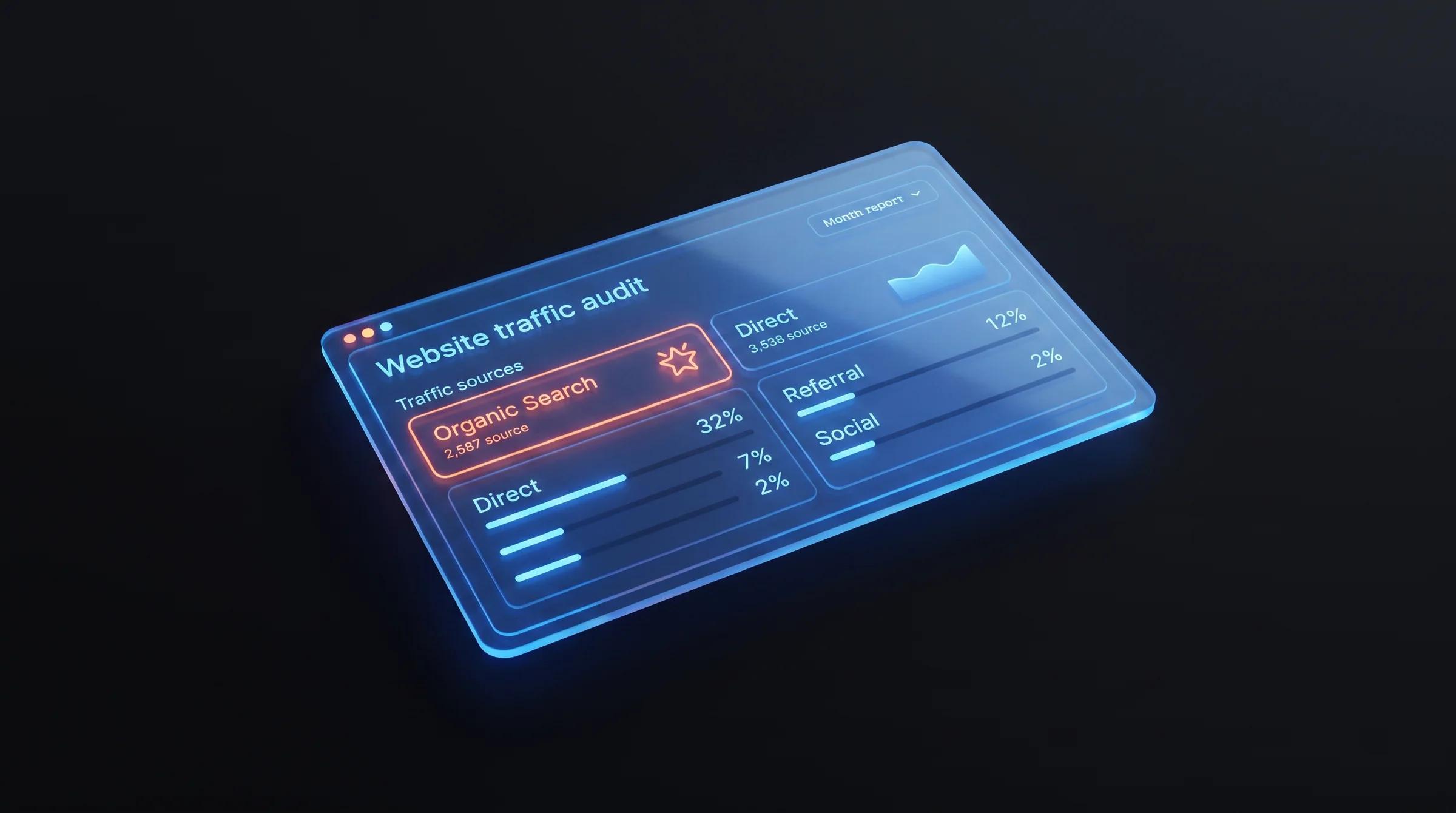
TL;DR
- Google ran six confirmed algorithm updates in the first eight months of 2026, more than the four it confirmed for all of 2025, per Google’s Search Status Dashboard: a Feb 5 Discover update, a Mar 24 spam update, a Mar 27 core update, a May 21 core update, a Jun 24 spam update, and an Aug 18 spam update.
- The March 2026 core update was the most volatile core update on record. SE Ranking’s dataset shared by Search Engine Land showed 79.5% of top-3 results changed position and 24.1% of top-10 pages fell out of the top 100 entirely.
- The March 2026 spam update rolled out in 19 hours, 30 minutes the fastest spam rollout Google has ever shipped, confirmed on the Search Status Dashboard and reported by Safari Digital.
- Information Gain moved from patent theory to primary signal. Google first filed its Contextual Estimation of Link Information Gain patent (US20200349181A1) in October 2018; by March 2026, Digital Applied’s analysis shows proprietary data and first-hand evidence carried 15-25% visibility gains while commodity AI content fell 60-80%.
- AI Overviews now appear on 43-55% of U.S. queries, Similarweb’s Generative AI Landscape report cited by Search Engine Land and Heroic Rankings’ 2026 data. When an AIO appears, organic CTR for the top result drops roughly 58%.
- AI Mode passed 1 billion monthly users in May 2026, with queries “more than doubling every quarter” per Google’s own I/O 2026 blog, so the SERP is no longer ten blue links and “core update” recovery now has to account for a moving surface.
- Recovery is no longer quick or guaranteed. Google’s own guidance states “a negative rankings impact may not signal anything is wrong with your pages,” and that the largest recovery typically comes with the next core update meaning a 2-4 month wait, minimum, for sites that did nothing wrong.
What this guide covers
- The 2026 Algorithm Reality: Why “Wait and See” No Longer Works
- The Confirmed 2026 Google Update Calendar
- What Each 2026 Update Actually Changed
- Your Early Warning System: Monitoring Dashboards That Catch Updates Within 48 Hours
- The Information Gain Audit: How to Find What Your Pages Are Missing
- E-E-A-T in 2026: Experience Is the Only Moat That Compounds
- The Five-Phase Recovery Playbook
- What to Fix First After a Hit (and What to Leave Alone)
- The AI-Search Contingency Plan
- What Won’t Work in 2026 (Stop Wasting Your Time)
- Measuring What Actually Matters After an Update
- Frequently Asked Questions
- Sources and References
The 2026 Algorithm Reality: Why “Wait and See” No Longer Works
A 4-person SaaS team I work with lost 60% of organic traffic during the week of March 27, 2026. They’d ranked #2 for their main keyword for three years. Their content was better than the #1 result. They had more backlinks, faster pages, and a product people wanted.
Then Google’s March 2026 core update dropped. They fell to page four.
Not because they did anything wrong. Because the SERP itself changed. Their content didn’t get worse the playing field tilted.
That’s the new reality. Here’s why.
Updates are arriving faster, hitting harder, and being driven by an AI that Google no longer describes in detail. Google’s Search Status Dashboard shows six confirmed algorithm updates in the first eight months of 2026, up from four for all of 2025. Two of them the March and May core updates were broad, multi-week rollouts that produced the worst volatility on record for the March update and lasting shake-outs for the May update. Google itself said the May 2026 core update “caused a lot of search ranking volatility over the rollout”.
And the surface those updates act on is no longer ten blue links. AI Overviews now appear on roughly 43-55% of U.S. queries, depending on the dataset you trust (Similarweb reports 43%; Semrush’s SERP tracking puts it at 48%; Heroic Rankings’ aggregator reports 55%). AI Mode passed 1 billion monthly users in May 2026, with Google noting queries are “more than doubling every quarter” (Google blog, May 19, 2026).
So when Google says “core update,” it now means a reassessment of which sources feed AI Overviews, AI Mode, and the chat-style answers not just which blue links rank #1. The pages you lose traffic to may not be pages at all. They may be AI-generated answers that include your brand and never send you a click.
The Hardest Lesson of 2026: Sites with original data, firsthand experience, and verifiable author credentials gained visibility across the March and May 2026 core updates. Sites publishing 100+ AI-generated articles per month with minimal human oversight lost 60-80% of organic traffic after March, per Digital Applied’s winners/losers analysis. The algorithm no longer rewards effort. It rewards evidence and now it’s running on signals that operate at the AI layer, not just the document layer.
This guide is about building adaptive resilience: the systems, signals, and playbooks that let you survive (and recover from) Google algorithm updates in 2026 without panic.
The Confirmed 2026 Google Update Calendar
The table below is the full, verified timeline of every Google ranking update Google itself acknowledged in 2026. Every entry is sourced to Google’s Search Status Dashboard and confirmed by reporting from Search Engine Land and Search Engine Roundtable.
| Update Name | Type | Start Date | Completion | Duration | What It Targeted | Source |
|---|---|---|---|---|---|---|
| February 2026 Discover update | Discover ranking system | Feb 5, 2026 | ~Feb 26, 2026 | 21 days, 17 hrs | “A broad update to our systems that surface articles in Discover” | Search Status Dashboard |
| March 2026 spam update | Spam policy enforcement | Mar 24, 2026 | ~Mar 25, 2026 | 19 hrs, 30 min (fastest spam rollout on record) | Cloaking, scaled AI content abuse, link spam, expired domain manipulation | Search Engine Land coverage; Safari Digital analysis |
| March 2026 core update | Broad core ranking | Mar 27, 2026 | Apr 8, 2026 (06:12 PDT) | 12 days, 4 hrs | “Better surface relevant, satisfying content for searchers from all types of sites”; amplified Information Gain and E-E-A-T | Search Engine Land completion notice; Search Engine Land impact analysis |
| May 2026 core update | Broad core ranking | May 21, 2026 | Jun 2, 2026 | 11 days, 21 hrs | “A regular update designed to better surface relevant, satisfying content”; cited as the second core update of 2026; “big one” producing severe volatility | Search Engine Land rollout announcement; SISTRIX Visibility Analysis |
| June 2026 spam update | Spam policy enforcement | Jun 24, 2026 (noon ET) | Jun 26, 2026 | 2 days, 1 hr | Global, all languages; standard spam update (no specific target disclosed) | Search Engine Land announcement; Search Status Dashboard |
| August 2026 spam update | Spam policy enforcement | Aug 18, 2026 | ~Aug 20, 2026 | 2 days, 16 hrs | Global, all languages; standard spam update | Search Engine Land announcement; Search Status Dashboard |
Cadence in context
- Six confirmed updates in 8 months (Jan–Aug 2026), versus four confirmed for all of 2025 (March, June, December core updates and one August spam update), per Search Engine Land’s 2025 year-end analysis.
- The pace is roughly 8-10 weeks between major events, not the 12-16 week cadence Google ran in 2022-2023.
- Spam updates are getting faster: the August 2025 spam update took 26 days and 15 hours, while the March 2026 spam update took 19.5 hours. That 30x acceleration signals Google’s SpamBrain system is moving closer to real-time enforcement.
- Core updates remain multi-week: both the March 2026 (12 days, 4 hrs) and May 2026 (11 days, 21 hrs) core updates took almost two weeks to roll out, per the Search Status Dashboard. Plan monitoring and decision-making around that window.
What Each 2026 Update Actually Changed
Numbers below are pulled from the data providers cited, not modeled or estimated.
March 2026 core update: the most volatile on record
- 79.5% of top-3 URLs changed position, vs. 66.8% after December 2025 a 12.7-point jump in volatility per the SE Ranking dataset shared with Search Engine Land.
- 90.7% of top-10 URLs shifted, vs. 83.1% in December.
- 24.1% of pages in the top 10 fell out of the top 100 entirely, vs. 14.7% in December meaning the cliff wasn’t just reshuffling, it was ejecting.
- Semrush Sensor peaked at 8.7/10 during days 3-7 of rollout, per Digital Applied’s March 2026 winners/losers analysis.
- 55%+ of monitored domains registered ranking changes.
March 2026 winners and losers (vertical breakdown)
Per Digital Applied’s analysis of Sistrix data and Aleyda Solis’s reporting for Search Engine Land:
| Vertical | Biggest Winners | Biggest Losers | Movement |
|---|---|---|---|
| Finance & Insurance | Established financial publications, credentialed analysts | Generic comparison sites | Losers: -35% to -55%; winners: +12% to +20% |
| Travel & Hospitality | Experience-based blogs, primary destinations | Templated destination guides, aggregators | Losers: -25% to -40%; winners: +10% to +18% |
| Tech & SaaS | Technical documentation, first-party publishers | Generic comparison sites | Losers: -20% to -30%; winners: +8% to +15% |
| Health & Wellness | Medical professionals, credentialed providers | Non-credentialed broad health sites | Losers: -30% to -45%; winners: +15% to +25% |
| Jobs / Recruiting | USAJobs, Amazon.jobs | ZipRecruiter, Glassdoor, Indeed | Aggregators lost; employer sites gained |
| Reference / Education | Government domains (Census.gov, BLS.gov), institutional sources | Dictionary, language reference, broad discovery | YouTube had the largest visibility loss in Aleyda Solis’s dataset |
AI content and affiliate sites were the headline losers
- 71% of tracked affiliate sites showed negative impact after March 2026, per Digital Applied.
- AI content farms (100+ AI-generated articles/month, no editorial review) lost 60-80% of organic traffic.
- Credit card and loan comparison sites: -40% to -55%.
- VPN and software review aggregators: -35% to -45%.
- Product roundups without hands-on testing: -30% to -40%.
- Coupon code aggregation sites: -25% to -35%.
What the May 2026 core update did differently
Google described it identically to the March update “a regular update designed to better surface relevant, satisfying content for searchers from all types of sites” but SISTRIX’s visibility analysis shows different winners and losers:
| Domain | May 2026 Movement | Type |
|---|---|---|
| freepeoplesearch.com | +267.24% | Niche tool (US) |
| upstart.com | +224.56% | Fintech brand |
| stinehome.com | +210.19% | Niche retail (US) |
| trip.com | +121.21% | Travel platform |
| tripadvisor.com | +3.16% (+21.46 absolute) | Travel reference |
| youtube.com | +16.32% (+591.66 absolute) | User-generated content |
| reddit.com | -13.74% (-363.85 absolute) | Community |
| wikipedia.org | -2.43% (-192.55 absolute) | Reference |
| amazon.com | -4.87% (-106.33 absolute) | E-commerce |
| zalesoutlet.com | -66.74% | Big-box retail |
| freepik.com | -63.09% | Stock image aggregator |
| onetonline.org | -60.07% | Government reference |
| macys.com | -43.70% | Department store |
Notable pattern: community and reference platforms (Reddit, Wikipedia, Amazon) absorbed losses in absolute visibility even though percentage-wise the moves look modest, because their baseline visibility is so high. Travel and experience-driven content (Tripadvisor, Trip.com, YouTube) gained.
The spam updates: shorter, sharper, more frequent
The three 2026 spam updates (March, June, August) collectively rolled out in under 4 days, compared to the August 2025 spam update’s 26 days and 15 hours (Safari Digital comparison). Google hasn’t named specific targets for the June or August 2026 spam updates, but the official spam updates documentation confirms SpamBrain Google’s AI-based spam prevention system is the enforcement layer, and that “[s]ites that violate our policies may rank lower in results or no longer appear in them at all.” Recovery, when violations are fixed, requires “a few months” of clean behavior before automated systems trust the site again.
“Released the August 2026 spam update, which applies globally and to all languages. The rollout may take a few days to complete.” Google’s Search Status Dashboard, August 18, 2026
Your Early Warning System: Monitoring Dashboards That Catch Updates Within 48 Hours
Most SEOs find out they were hit by an algorithm update when a stakeholder asks why organic traffic dropped 30%. That’s two weeks late. Here’s how to know within 48 hours.
The four data sources you must wire up
1. Google Search Console (free, must-have). Watch the Performance report. The signals that flag an algorithm impact rather than a normal fluctuation:
- Impressions flat, clicks down 15%+: Your rankings held but click-through rate collapsed. Usually a SERP feature (AIO, AI Mode, PAA, Generative UI) is stealing attention above you.
- Average position shifts of 5+ spots on commercial intent keywords: A direct ranking signal.
- Disappearance from Discover (check the Discover report in GSC): Often the first visible hit during broad core updates.
2. Google Analytics 4 (free, must-have). Compare 7-day rolling windows to a 28-day baseline. Filter to organic traffic. Look for:
- Sitewide drops of 20%+ week-over-week
- Section-specific drops (one template, one product line, one author)
- Engagement quality: Pages per session, conversion rate, return visitor %
3. A rank tracker (paid, must-have). The volatility tools that caught the 2026 updates in real time (all show data the morning of rollout): Semrush Sensor, SISTRIX Radar, Accuranker, Advanced Web Rankings, Wincher, Mangools, Algoroo, Mozcast. Configure alerts for category-level volatility above ~7/10.
4. An AI visibility tracker (emerging, increasingly essential). The SERP your customers see is no longer a flat list of URLs. Track whether you’re cited inside:
- AI Overviews (use Ahrefs’ Brand Radar, OtterlyAI, or Profound)
- AI Mode (similar tools, plus ZipTie.dev for prompt-level tracking)
- ChatGPT, Perplexity, Gemini, Copilot citations (OtterlyAI and Press Ranger track across LLMs)
Configure alerts before you need them
Set these triggers to fire within 48 hours of an update starting:
- Organic sessions drop >20% week-over-week (GA4 custom alert)
- Brand or non-brand impressions in GSC shift >15% in any 7-day window
- Rank tracker volatility index crosses 7.0/10 in your tracked categories
- AI Overview citation share for your top 50 commercial queries drops to 0% (sudden exclusion)
- Average position for top 20 commercial keywords moves >5 spots
What to ignore during rollout
Both the March 2026 (12d 4h) and May 2026 (11d 21h) core updates took nearly two weeks to fully deploy, per the Search Status Dashboard. Rankings fluctuate wildly inside that window. Don’t make changes mid-rollout. Wait for the official “completed” notice on the dashboard.
The March 2026 core update saw peak volatility days 3-7 of rollout, with rankings partially settling before the official April 8 completion, per SE Ranking data. If you started rewriting content on day 4, you were chasing a moving target.
The Information Gain Audit: How to Find What Your Pages Are Missing
“Improve content quality” used to be the lazy advice in every recovery guide. That changed in March 2026.
Google’s information gain patent US20200349181A1, filed in October 2018, granted June 7, 2022 as US11354342B2, describes a system for scoring documents on how much additional information they provide beyond what a user has already seen. For years SEOs treated it as a curiosity. After the March 2026 core update, Digital Applied’s analysis shows it became the dominant ranking factor.
The patent’s abstract makes the mechanism explicit:
“An information gain score for a given document is indicative of additional information that is included in the document beyond information contained in documents that were previously viewed by the user.” US20200349181A1 abstract
The 5-dimension scoring rubric (from Digital Applied)
| Dimension | Range | What earns full credit |
|---|---|---|
| Proprietary data | 0-2 | Dataset you generated yourself |
| First-hand evidence | 0-2 | Screenshots, transcripts, tool output from your own use |
| Original framework | 0-2 | A named framework or decision tree you introduced |
| Expert attribution | 0-2 | Named author with verifiable experience in the topic |
| Freshness hook | 0-1 | Tied to a dated event or recent change |
Maximum score: 9. The recommended publishing threshold: 7+. A 600-word post with one original benchmark can outrank a 3,000-word comprehensive guide that paraphrases other sources.
How to run the audit
Step 1 Export your top 50 organic landing pages from GA4. Filter for sessions that dropped 20%+ after March 2026. For each page, ask:
- What does MY article say that the top 5 search results don’t?
- Did I include original data, testing results, or firsthand experience?
- Can someone read the #1 result, then mine, and learn something genuinely new?
Step 2 Score each page on the 5 dimensions above. Be ruthless. If your “original data” is a survey of 12 customers you conducted in 2021 and never updated, that’s a 0. If your “framework” is something you found on another site and renamed, that’s a 0.
Step 3 Identify the patterns.
- Pages scoring 0-2 across all dimensions: These are commodity content. Either rewrite with information gain or accept they’ll keep losing.
- Pages scoring 7+: These are your defensive anchors. Double down.
- Pages scoring 3-6 with a single dimension dragging them down: Targeted fixes will recover these.
What “information gain” looks like in 2026
Compare two hypothetical articles ranking for “best project management software for startups”:
| Dimension | Article A | Article B |
|---|---|---|
| Proprietary data | None | Usage data from 6-month test with 12-person team |
| First-hand evidence | Stock screenshots | Screenshots with timestamps showing specific failure points |
| Original framework | “10 tools compared” | Decision framework based on team structure |
| Expert attribution | Anonymous | PM with 8 years of experience, LinkedIn verified |
| Freshness hook | None | Last tested: August 2026 |
Article B wins because it has information the other nine pages on page 1 don’t have.
The proxy signals Google uses to measure it
You can’t directly query Google’s information gain score. But you can measure its proxies:
- Referential backlinks (4-8 week window) if other sites cite your page, you had something to cite.
- Long-tail ranking gains (2-6 weeks) high information gain pages accumulate long-tail traffic as Google understands their uniqueness.
- Time on page vs. SERP average (immediate) readers stay because they learn something new.
- Organic CTR (1-4 weeks) pages with novel content earn higher click share because they earn AI Overview citations.
If all four of these proxies are weak on a given page, you have an information gain problem.
E-E-A-T in 2026: Experience Is the Only Moat That Compounds
Google added an extra E to E-A-T in December 2022. After the March 2026 core update, Digital Applied’s data shows that “Experience” carried more weight than the other three for the first time.
Google’s documentation on creating helpful, reliable, people-first content puts it like this:
“Trustworthiness is the most important.”
But “trustworthiness” in 2026 is no longer just HTTPS, contact pages, and editorial policies. It’s evidence that a real human did the thing the page describes. The March 2026 update specifically rewarded:
- Named authors with linked, verifiable professional profiles (+15-25%)
- First-person experience markers (specific error messages, interface quirks, workflow details)
- Original photos, screenshots, proprietary data
- Topical depth via interlinked content clusters
And it specifically penalized:
- Anonymous “Staff Writer” bylines
- Content outside the site’s domain (off-topic content farms)
- No evidence of firsthand testing
- Thin author bios or missing credentials
How to demonstrate experience without faking it
Add specific, verifiable details only someone who actually used, tested, or did the thing would know:
- Screenshots with visible timestamps or browser URLs
- Specific error messages, interface quirks, or workflow details
- Documented problems you encountered and how you solved them
- Exact navigation paths (“In Settings → Integrations → Slack → Connect workspace”)
- Named versions, dates, plan tiers
Generic (no experience signal): “This tool helps you track email campaigns and improve your marketing.”
Experience-driven: “After importing 3,200 contacts, the dashboard took 8 seconds to load campaign analytics. We fixed this by segmenting lists into groups under 500 contacts, which dropped load time to under 2 seconds.”
The second statement proves you actually used the tool. The first could have been written by an AI that scraped the product website.
Don’t fabricate experience
Google’s SpamBrain is now sophisticated enough to detect patterns that suggest fake testing. If you haven’t used a product, either use it or don’t write about it. The March 2026 spam update completed in 19 hours and 30 minutes the fastest spam rollout Google has ever shipped and Google’s official spam updates documentation warns: “[m]aking changes may help a site improve its ranking if our automated systems observe over some months that the site complies with our spam policies.”
Translation: SpamBrain is real-time. The penalty for getting caught faking it now lasts months.
The Five-Phase Recovery Playbook
This is the framework I use with clients when algorithm updates hit. The phases stay the same regardless of which update fired. The specific actions inside each phase change based on what the update targeted.
Phase 1 Confirm impact (Days 1-3)
Don’t act yet. Just measure.
- Wait for Google’s official completion notice on the Search Status Dashboard. The dashboard is the source of truth. Treat any “is it done yet?” question with the dashboard answer.
- Compare 7-day post-rollout vs. 7-day pre-rollout for: organic sessions (GA4), impressions and average position (GSC), tracked keyword visibility (rank tracker), AI Overview citation rate (AI visibility tool).
- Classify the impact: sitewide, section-specific, or template-specific?
- Check whether competitors in your niche were also affected. If yes, it’s an industry reset. If only you were hit, it’s something more specific.
The May 2026 core update SISTRIX analysis showed it produced wildly different outcomes for very similar domains meaning competitor comparison is a more reliable signal than your absolute traffic drop.
Phase 2 Diagnose cause (Days 4-14)
Don’t fix yet. Find the actual cause.
- Analyze SERP changes. What new features appeared for your affected queries? Did AI Overviews start showing? Did Reddit or YouTube start ranking? Did Google build a custom widget (Generative UI)?
- Audit information gain on the affected pages using the 5-dimension rubric.
- Audit E-E-A-T signals author credentials, experience markers, content depth.
- Check Core Web Vitals for affected pages at PageSpeed Insights using field data (real users), not lab data.
- Compare your content to the current top 5 results side by side. Where are they better? Where are they worse?
- Check for spam policy violations has anything changed on your site that might trip SpamBrain? New sponsored content, new affiliate disclosures missing, new links from low-quality sources?
Phase 3 Prioritize fixes (Days 15-30)
Score pages by: Traffic lost × Conversion value × Ease of improvement.
Focus on the top 20% of pages driving 80% of the impact. If a page lost traffic but never converted, deprioritize. If a page lost 50% of traffic but drove 30% of your pipeline, fix it first.
Identify the dominant pattern:
- Is it a content quality issue (low information gain)? → Phase 4 content rewrite.
- Is it a technical issue (CWV, schema, indexing)? → Engineering work.
- Is it a SERP evolution issue (AIO, Reddit, Generative UI)? → Channel pivot, not content fix.
Phase 4 Implement improvements (Months 2-3)
- Update high-priority pages with information gain additions. Don’t rewrite the whole article. Add a layer of original data, first-hand evidence, or expert framework.
- Improve E-E-A-T signals systematically. Add author bios with verifiable credentials to every page. Link to author entity pages. Add dates, screenshots, specific details.
- Fix technical issues. Comply with Google’s Core Web Vitals thresholds LCP under 2.5s, INP under 200ms, CLS under 0.1. Add Article, HowTo, FAQ, and Organization Schema. Test at Google’s Rich Results Test.
- Test one approach, measure results, iterate. Don’t change 50 things at once. You’ll never know what worked.
Phase 5 Monitor and adapt (Ongoing)
- Track recovery metrics weekly not daily. Daily data is too noisy during the months-long aftermath of a core update.
- Adjust strategy based on what worked. If information gain additions recovered rankings, do more of them. If they didn’t, the problem was elsewhere.
- Prepare for the next update. Based on the 2026 cadence (six updates in 8 months), expect another major event roughly every 6-10 weeks.
Google’s own guidance is clear on the timing of recovery:
“A negative rankings impact may not signal anything is wrong with your pages. … The largest change would likely be after another core update.” Google’s core updates documentation
That means budget at least one full update cycle (2-3 months) to see meaningful recovery. If your leadership expects traffic back in 30 days, set expectations now.
What to Fix First After a Hit (and What to Leave Alone)
Not everything you might be tempted to change is worth changing. Here’s the triage.
Fix these first
- Pages where you lost 30%+ of traffic and they were top-3 before. These are your highest-value pages. Diagnose SERP changes and information gain. Often a single new data section or expert quote recovers them.
- Pages where AI Overviews appeared on your queries after the update. If AIOs are now answering the query above you, you need to win the AIO citation. Structure your content for AI extraction: clear definitions, cited sources, Q&A format, schema markup.
- Pages with the worst Core Web Vitals scores in your top 50. Only about 47% of websites pass all three CWV thresholds. If you’re in the failing 53%, this is free recovery headroom.
- Pages with thin author bios or missing credentials. March 2026 specifically rewarded named authors with verifiable profiles. Add them systematically.
Leave these alone
- Pages that already rank in the top 3 and didn’t lose traffic. Don’t disturb them. The instinct to “update everything for freshness” creates risk for no upside.
- Pages already ranking well in AI Overviews. Don’t restructure them. Test changes carefully.
- Commodity content with no information gain path. If a page is ranking despite being a rewording of the #1-#5 results, the SERP will eventually catch up to it. Either invest the work to make it genuinely novel or let it die naturally.
The AI-Search Contingency Plan
Most recovery guides assume the SERP still looks like ten blue links. In 2026 it doesn’t. Your contingency plan needs to account for AI-driven disruption.
What changed at I/O 2026
Google’s May 19, 2026 I/O keynote announced:
- Gemini 3.5 Flash as the new default model in AI Mode
- AI Mode passed 1 billion monthly users, with queries “more than doubling every quarter”
- Intelligent AI-powered Search box described by Google as the biggest Search box upgrade in 25 years, accepting multimodal inputs (text, images, files, videos, Chrome tabs)
- Information agents that monitor the web 24/7 and proactively alert users (Google AI Pro and Ultra subscribers first, summer 2026)
- Generative UI custom widgets, dashboards, mini-apps built directly in search results
- Personal Intelligence expanded to ~200 countries and 98 languages
Elizabeth Reid, Google’s VP of Search, summarized the shift:
“Bringing our advanced model capabilities to Search with new AI features, enabling you to use agents just by asking a question. … The next chapter of Google Search: intelligent AI that puts the world’s information to work for you.”
What that means for your contingency plan
1. Diversify across the surfaces that Google now uses. You can’t rank #1 if Google builds the answer itself. Win the citation inside AI Overviews and AI Mode instead. Tactics:
- Structure content as Q&A blocks with clear answers, source citations, and entity markers
- Add Article, FAQ, HowTo, Organization Schema to feed entity extraction
- Build Wikipedia/Wikidata entries where you meet notability criteria
- Get coverage on Reddit, YouTube, and Quora these are the answer pools ChatGPT and Gemini draw from most heavily
2. Watch for AI Overview exclusion events. If your top queries suddenly stop citing you inside AIOs, that’s a new failure mode. Set alerts in your AI visibility tracker for citation drops to 0% on commercial queries.
3. Optimize for the buyer journey stage, not just keywords.
- Informational stage: AI Overviews, AI Mode, Generative UI dominate. Your “What is X?” content is getting squeezed. Invest in YouTube, Reddit, and AI Overview citation optimization instead.
- Consideration stage: This is where you can still win. Build deep comparisons, case studies, “X vs. Y” content that demonstrates expertise.
- Decision stage: Commercial intent queries still drive conversions. “Best X for [specific use case]” still sends traffic because users need to transact on your site.
4. Plan for Generative UI. When Google builds a custom widget that answers a query without a click, no amount of on-page SEO saves you. The playbook is to be the underlying data source. Publish original, well-structured datasets (with API access if possible) that Google’s UI can pull from.
Nick Fox, Google’s SVP of Knowledge & Information, said it directly at Google Marketing Live 2026:
“The way to optimize for AI search is the same way to optimize for search. Create great content. … The best content that will do the best within AI is one that goes one level deeper, two levels deeper, and is really helpful there.”
“As humans we want to hear from humans. We want to hear human perspectives. We want to hear human experiences.”
That’s the bar. Depth and human perspective not keyword density or backlink count.
What Won’t Work in 2026 (Stop Wasting Your Time)
I’ve watched teams burn months on tactics that moved nothing during the 2026 updates:
1. Changing all dates to “2026” without updating content. Google detects actual modification, not display dates. Nick Fox’s interview made this explicit: depth matters, not dates.
2. Deleting underperforming pages. Unless they’re spam or truly thin, removal hurts topical authority. Google’s documentation says: “We don’t recommend deleting content, except as a last resort, and only if there’s no way to fix it.” Improvements to topical authority often come from improving weak pages, not removing them.
3. Building more backlinks. The March 2026 update rewarded content quality and information gain, not link profiles. Backlinks still matter for authority, but they won’t save poorly differentiated content.
4. Rewriting everything with AI. If your content lacks original insight, AI can’t invent it. The March 2026 spam update specifically targeted scaled AI content lacking editorial oversight, and Digital Applied’s data shows AI content farms lost 60-80% of traffic.
5. Obsessing over individual keywords. If Generative UI builds a custom dashboard that answers a query without a click, you’re not going to outrank an interactive Google widget by tweaking your meta description.
6. Filing reconsideration requests. Core updates aren’t penalties or manual actions. Google’s documentation explicitly says: “A negative rankings impact may not signal anything is wrong with your pages.” Reconsideration only applies to manual actions, which appear in Google Search Console under Security & Manual Actions.
Measuring What Actually Matters After an Update
Rankings and traffic are vanity metrics when conversions tank. After algorithm updates, track these instead.
Quality metrics
- Pages per session did engaged visitors stick around?
- Average session duration are they reading or bouncing?
- Conversion rate fewer visitors converting at higher rates = good targeting
- Return visitor percentage brand strength indicator
Engagement signals
- Scroll depth how far do people read?
- Internal link click-through rate do they explore related content?
- Newsletter signups micro-conversion tracking
- Direct traffic growth brand searches and bookmarks
Real example from the March 2026 update
One e-commerce client lost 40% of organic traffic after the March 2026 core update, but revenue dropped only 12%. Why? They lost unqualified info-seeking traffic but retained commercial-intent visitors who actually bought.
Their recovery strategy didn’t focus on regaining lost traffic. It focused on increasing conversion rate on the traffic they still had. Three months later, revenue exceeded pre-update levels despite traffic being 30% lower.
That’s what adaptive resilience looks like. The metric isn’t traffic. The metric is qualified outcomes.
Build a Repeatable Response Framework
Here’s the system I use with clients. Keep it running all the time, not just during updates.
Phase 1 Confirm impact (Days 1-3): Wait for Google’s completion notice. Compare 7-day pre/post. Classify impact (sitewide vs. section). Check if competitors were hit.
Phase 2 Diagnose cause (Days 4-14): Analyze SERP changes (AIO, Reddit, YouTube, Generative UI). Audit information gain. Audit E-E-A-T. Check Core Web Vitals. Compare to current top 5. Check spam policies.
Phase 3 Prioritize fixes (Days 15-30): Score by Traffic lost × Conversion value × Ease of improvement. Focus on top 20% driving 80% of impact. Identify dominant pattern.
Phase 4 Implement improvements (Months 2-3): Information gain additions. E-E-A-T signals. Technical fixes (CWV, schema). Test one approach at a time.
Phase 5 Monitor and adapt (Ongoing): Track recovery weekly. Adjust based on what works. Prepare for next update.
The framework stays the same. The specific actions change based on what each update targeted. The March 2026 update targeted information gain and AI content. The May 2026 update produced different winners (travel and brand-led content) and different losers (broad retailers and reference platforms). The spam updates targeted scaled abuse and required clean behavior over months.
When to Call for Backup
Sometimes you need outside help. Here’s when:
- Traffic dropped 50%+ and you can’t identify why
- Technical issues are beyond your team’s expertise (rendering, JS-heavy frameworks, faceted navigation)
- You need content production at scale to fill information gain gaps
- Your recovery attempts aren’t working after 3 months
- AI Overview citations have dropped to 0% on your highest-value queries
A good SEO partner doesn’t just audit your site and hand you a spreadsheet. They build the monitoring infrastructure, train your team on pattern recognition, and create systems that survive the next update without external help.
If you’re looking for a team that treats algorithm updates as a known business risk rather than an emergency, LoudScale builds adaptive resilience into growth strategies so you’re ready before the next update hits. Check our SEO strategy services for a custom adaptive resilience plan, or read our core update recovery case studies to see how we’ve helped businesses recover from algorithmic impacts.
The Long Game
Google released six confirmed algorithm updates in the first eight months of 2026. They’ll release more in Q4, and more in 2027.
Algorithm updates aren’t problems to solve. They’re a permanent feature of the landscape.
The brands that thrive don’t panic after each update. They build systems that adapt automatically:
- Content strategies that prioritize information gain from day one
- Monitoring dashboards that detect issues within 48 hours
- Recovery frameworks that activate without wasted motion
- Distribution models that don’t depend solely on Google
You can’t control Google’s algorithm. But you can control how prepared you are when it changes.
Start building that resilience today. Because the next update isn’t a matter of if. It’s a matter of when.
Frequently Asked Questions
How often does Google release algorithm updates in 2026?
Google released six confirmed algorithm updates between February and August 2026 (Feb 5 Discover update, Mar 24 spam update, Mar 27 core update, May 21 core update, Jun 24 spam update, Aug 18 spam update), per Google’s Search Status Dashboard. The 2025 full-year total was four confirmed updates per Search Engine Land’s year-end analysis. Expect roughly one major update every 6-10 weeks based on 2026’s pace. Google does not announce all its smaller ranking changes, only the broad ones.
Will my rankings recover automatically after a core update?
Not necessarily. Google’s official guidance says that “the largest change would likely be after another core update,” meaning meaningful recovery typically requires waiting for the next broad core update usually 2-4 months. Some recovery also occurs through continuous smaller unannounced adjustments. Significant content improvements compound over months. Some sites never fully recover not because they failed to fix issues, but because the SERP itself changed (AI Overviews, AI Mode, Generative UI absorbed the space).
How do I know if my traffic drop was from a Google update vs. seasonality or technical issues?
Check three signals: (1) Did Google announce an update rolling out during the drop window? Cross-reference your traffic drop date against the Search Status Dashboard. (2) Was the drop sitewide or section-specific? Algorithm updates usually hit sitewide or by template. Technical issues often hit specific URL patterns. (3) Check volatility tools Semrush Sensor, SISTRIX, Mozcast. If they’re showing high volatility for your category on the date your traffic dropped, it’s algorithmic. If they’re flat, look for technical causes.
What is information gain and why does it matter for SEO in 2026?
Information gain measures how much genuinely new knowledge a page contributes relative to existing pages ranking for the same query. Google described the approach in patent US20200349181A1, filed October 2018 and granted June 2022. After the March 2026 core update, Digital Applied’s analysis showed information gain became the dominant ranking factor: pages with original research gained 15-25% visibility, while templated AI content farms lost 60-80%. To improve information gain: add proprietary data, first-hand evidence, original frameworks, named expert attribution, and dated freshness hooks.
Should I update old content even if it’s still ranking?
Yes, but strategically. Google rewards genuine improvements, not cosmetic changes. Google’s documentation explicitly warns against changing dates without meaningful updates. Update when there’s new information to add (updated statistics, new product features, changed best practices) or when competitors have published more comprehensive versions. Nick Fox told Search Engine Land at Google Marketing Live 2026: “Create great content. … Go beyond the surface level. … One level deeper, two levels deeper.” If you can’t articulate what changed and why it adds value in 2-3 sentences, don’t change the date.
What should I do about AI Overviews and AI Mode eating my clicks?
Three-pronged response. First, win the AIO citation: structure content with clear Q&A blocks, cited sources, schema markup (Article, FAQ, HowTo, Organization). Test with Google’s Rich Results Test. Second, track AI citation share as a KPI alongside organic traffic being cited inside an AIO is now a real visibility win even without the click. Use Ahrefs Brand Radar, OtterlyAI, or Profound. Third, diversify traffic sources. Similarweb’s data shows roughly 58% CTR drop for the top organic result when an AIO appears. Plan for that as the new normal, not the exception.
Can I file a reconsideration request for a core update impact?
No. Core updates aren’t penalties or manual actions. Google’s documentation is explicit: “A negative rankings impact may not signal anything is wrong with your pages.” Reconsideration requests only apply to manual actions, which appear in Google Search Console under Security & Manual Actions. Core update impacts reflect algorithmic reassessment of content quality relative to competitors. Focus on improving content quality and wait for the next broad core update for meaningful recovery.
What is the fastest way to detect a Google update for my site?
Wire up three monitoring sources and configure alerts before you need them: (1) Google Search Console Performance report, with custom alerts for >15% week-over-week shifts in impressions or average position. (2) Google Analytics 4, with alerts for >20% week-over-week organic sessions drop. (3) A rank tracker (Semrush, Ahrefs, Accuranker) with volatility alerts above 7.0/10 for your tracked categories. Add an AI visibility tracker (Ahrefs Brand Radar, OtterlyAI) for AIO/AI Mode citation drops. The combined setup gives you a 48-hour detection window instead of a 2-week post-mortem.
- Website Growth GraderFlagship free growth grade score before email.
- SEO Checker40+ live HTML checks on any public URL.
- AI Visibility ReadinessAnswer-engine readiness and extractability.
Diagnostics show a useful score before email. Explore LoudScale services when you want a full plan and implementation.
LoudScale Team
Growth Marketing Specialists
The LoudScale team shares practical strategies and experiments across search and AI visibility, content authority, B2B lead generation, lifecycle systems, analytics, and responsible AI.