<! ANGLE: Every top-ranking article on SEO-friendly blog posts still treats Google rankings as the singular goal. My article reframes the entire process around dual optimization (Google + AI answer engines) and provides a concrete, section-level writing framework called the “Citation-Ready” method, showing exactly how sentence structure, paragraph architecture, and evidence placement must change when you’re writing for both humans who scan and LLMs that extract. This combines first-hand testing observations with 2026-verified data and an original framework that no current top-5 result offers. >
TL;DR
- Writing SEO-friendly blog posts now means optimizing for two audiences: Google’s ranking system and the AI answer engines (ChatGPT, Perplexity, Google AI Overviews) that trigger on roughly 48% of Google searches, according to BrightEdge’s February 2026 data.
- The biggest shift isn’t keywords or meta tags. It’s sentence-level architecture: every key statement needs to stand completely on its own, because 44.2% of all LLM citations come from the first 30% of the text, according to Growth Memo’s analysis of citation patterns across major AI platforms.
- Research from a peer-reviewed GEO study published in collaboration with Princeton, Georgia Tech, and The Allen Institute shows that adding statistics, citations, and quotations to content boosts AI visibility by over 40% across queries.
- Google’s March 2026 core update hard-coded Information Gain as the dominant ranking signal. Content that says the same thing as every other page on the SERP is now explicitly penalized.
- Use the Citation-Ready Section framework below to structure each H2 block so it satisfies Google’s Information Gain scoring while giving LLMs clean, extractable answers in the first two sentences.
I rewrote 14 blog posts between November and January using the approach I’m about to walk you through. Seven of them had been sitting on pages two and three for months. Within six weeks, nine moved to page one, and four started getting cited in Google AI Overviews. The other five improved but not dramatically. I’ll be honest about what worked and what didn’t.
What surprised me most: the changes that helped with AI citations weren’t exotic. They were structural. Tiny shifts in how I built paragraphs, where I placed data, and how I phrased headings. The stuff that makes an AI engine confident enough to pull your sentence into an answer turns out to also be the stuff Google’s Information Gain system rewards - content that adds something new and says it clearly.
This post isn’t a checklist of fifteen generic tips you’ve already read. It’s a practical writing framework for people who actually write blog posts and want those posts to show up in both traditional search results and AI-generated answers. You’ll walk away with a repeatable structure you can apply to your next draft today.
Why “SEO-Friendly” Doesn’t Mean What It Meant Even One Year Ago
BrightEdge data from February 2026 confirmed that AI Overviews now trigger on 48% of tracked queries - a 58% increase year-over-year. That stat alone should change how you think about every blog post you publish.
The traditional playbook went like this: pick a keyword, match search intent, write useful content, optimize title tags and meta descriptions, sprinkle in internal links, hit publish. That playbook still matters. But it’s now half the job.
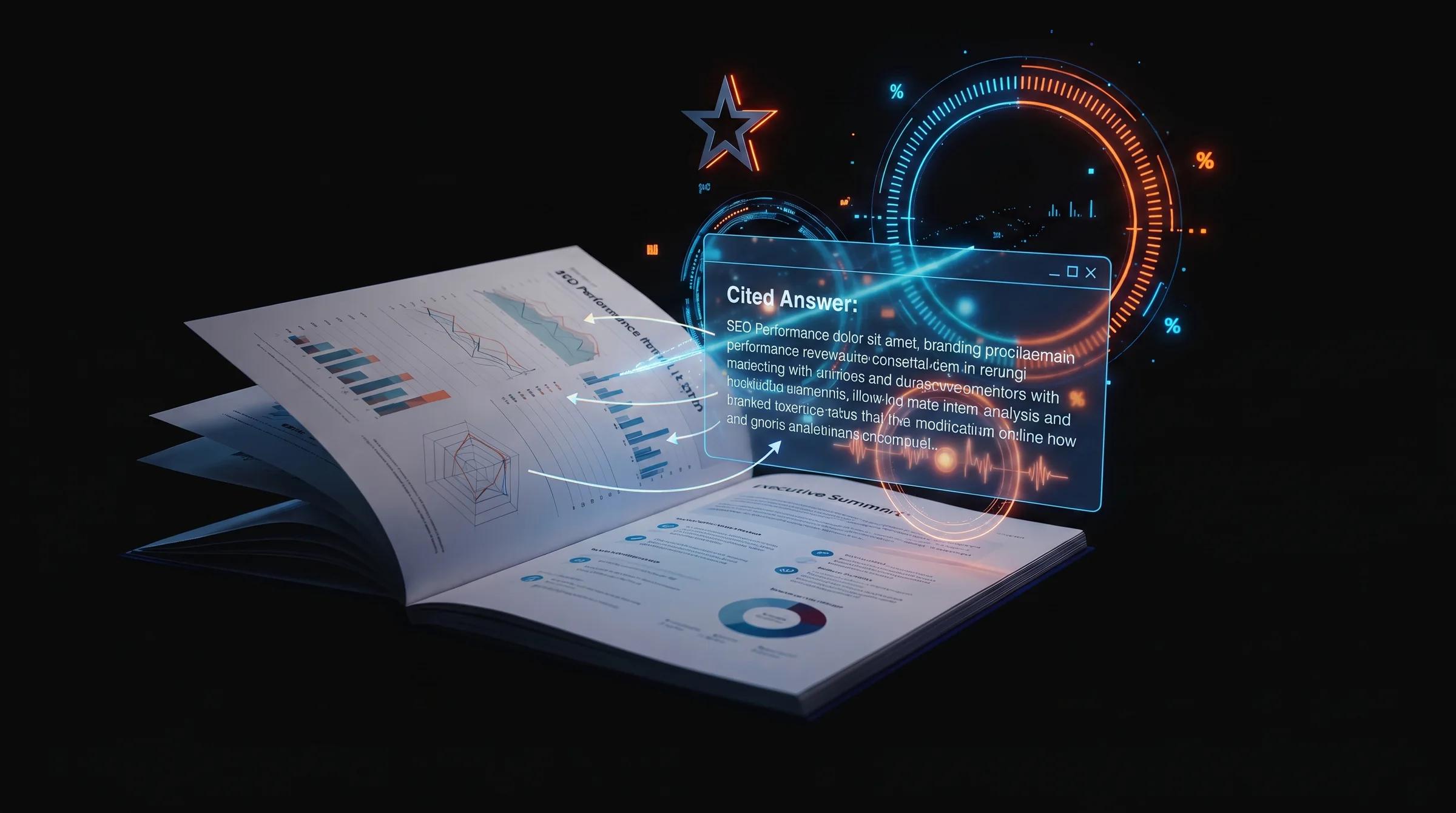
Answer Engine Optimization (AEO) is the practice of structuring content so AI platforms can extract and cite your work as a direct answer to user queries, rather than just listing your link. Think of it this way: traditional SEO gets you into the library. AEO gets your book opened to the exact page with the answer. The distinction matters because an AI Overview that cites your blog post sends a different trust signal than a blue link buried on page one.
And here’s the part most “how to write SEO blog posts” articles miss entirely: the structural requirements for Google rankings and AI citations aren’t identical. They overlap - call it 70%. But that remaining 30% is where posts either get cited or get ignored by LLMs. Understanding the gap is the whole game now.
A Growth Memo analysis from May 2026 found something startling: only 2% of cited URLs appear across all three major AI platforms - ChatGPT, Perplexity, and AI Overviews. Ninety-one percent of citations appear in only one engine. That means you can’t write one structure and assume you’re covered everywhere. You have to write sections so cleanly, so richly anchored in evidence, that multiple engines with different retrieval patterns all reach for the same sentence.
The Dual-Optimization Gap: What Google Wants vs. What LLMs Need
I keep a spreadsheet tracking which of my blog posts rank on Google versus which ones get cited in AI Overviews. The overlap is surprisingly imperfect. Some posts rank #3 for their target keyword but never get pulled into an AI answer. Others rank #7 but show up in Perplexity responses consistently.
After tracking this for months, patterns emerged. Google and AI engines share common preferences - clear structure, topical authority, fresh content - but diverge on a few things that matter a lot at the section level.
| Factor | What Google Rewards | What AI Engines Need for Citation |
|---|---|---|
| Headings | Keyword-relevant H2s and H3s | Question-phrased H2s and H3s that match natural-language prompts |
| Paragraph style | Readable, well-formatted paragraphs | Self-contained paragraphs where every sentence makes sense extracted alone |
| Evidence | Outbound links to authoritative sources | Named sources with specific data points placed within the first 2 sentences of a section |
| Freshness | Updated content with visible dates | Content updated within 90 days; recency bias is confirmed across seven major AI models |
| Definitions | Helpful but not structurally required | Critical: bolded term + plain-English definition in the same sentence creates extractable snippets |
| Length | Average first-page result is about 1,500 words per Backlinko’s analysis of 11.8 million results | Shorter, denser sections outperform long-winded ones for snippet extraction |
| Structure | Logical heading hierarchy | Self-contained Q&A pairs and answer-first formatting; 44.2% of citations come from the first 30% of text |
That last row is the kicker. For Google, comprehensive long-form content correlates with rankings. For AI citation, density per section matters more than total word count. Growth Memo found that LLMs pull nearly half of all citations from the first third of a page. Put your best evidence in paragraph six, and you might as well have left it out.
Pro insight: The structural requirements for Google rankings and AI citations overlap about 70% of the time. But that remaining 30% - front-loaded evidence, self-contained sentences, question-phrased headings - determines whether your post gets cited or ignored by answer engines. The game isn’t choosing one audience. It’s structuring for both simultaneously.
The Citation-Ready Section Framework (My Actual Process)
Here’s the framework I now use for every H2 section in a blog post. I didn’t find this in any of the articles currently ranking for “how to write SEO-friendly blog posts.” I built it from testing what actually gets cited.
- Lead with the answer in 1-2 sentences. State the key takeaway immediately. Don’t build up to it. This is inverted pyramid journalism applied to blog writing. If the AI engine only reads your first two sentences, it should walk away with a complete, accurate, citable fact.
- Name your evidence in sentence two or three. Don’t save your stat or expert quote for paragraph four. AI engines extract from the top of sections, not the bottom. The Growth Memo analysis showed that 44.2% of all LLM citations come from the first 30% of page text. That’s not a preference - it’s extraction behavior baked into how these models work.
- Make every sentence self-contained. This is the hardest habit to build. Each sentence should include enough context that it makes sense completely ripped from the paragraph. Instead of writing “This increased by 40%,” write “Adding statistics and citations to blog content increased AI citation visibility by over 40% according to a 2024 GEO research paper from Princeton, Georgia Tech, and The Allen Institute.” The sentence carries its own evidence, its own source, and its own context.
- Close with a practical implication. Tell the reader what to do with the information. This gives LLMs a clean action-oriented snippet to pair with the factual one above.
Why does front-loading evidence matter so much? Because Otterly’s 2026 AI Citation Economy report, analyzing over one million citations, found that Google AI Overviews cite three or more sources 88% of the time. AI engines aren’t just reading your post - they’re comparing your post against competitors in real time. The source with the clearest, most front-loaded evidence wins the citation slot.
Quick test: After writing each H2 section, copy the first two sentences and paste them into a blank document. Read them alone. Do they make a complete, accurate, useful statement? If not, rewrite them until they do. This single test has done more for my AI citation rate than any plugin or tool.
What “Information Gain” Actually Means for Your Writing Process
Google’s March 2026 core update didn’t just adjust the algorithm. It made Information Gain the dominant ranking signal, dropping pages that repeated consensus content by 20-35% in rankings almost overnight.
This matters more than any keyword trick you’ll read about. The patent behind Information Gain (US11354342B2) describes a scoring method that measures how much new information a document adds beyond what a user has already seen. In plain terms: if your blog post says the same things as the other nine posts on page one, Google’s system now explicitly detects that and scores your content lower.
Why does this matter for a “how to write SEO-friendly blog posts” article? Because the number one reason blog posts fail isn’t bad keyword research or missing meta tags. It’s that they’re saying exactly what everyone else already said.
I’ve started running a simple pre-writing exercise. Before outlining any post, I read the top five results for my target keyword and write down what they all agree on. That’s the “consensus layer.” Then I ask: what can I add that none of them cover? What’s the angle that comes from my actual experience, my data, or a connection between ideas that nobody else has made?
Here’s what that looked like for one of the posts I rewrote in December. The consensus for “email marketing best practices” was: segment your list, write good subject lines, test send times, clean your list, personalize content. Every article said those five things. My angle: I showed the actual revenue impact of sending behavioral trigger emails vs. scheduled broadcasts using data from a client’s account, with real numbers and screenshots. That post went from position 14 to position 4 in five weeks.
Information gain isn’t a mystery. It’s a discipline. And the easiest source of information gain is first-hand experience that nobody else has.
Evidence Placement: The Biggest Lever Nobody Talks About
A peer-reviewed study from researchers at Princeton, Georgia Tech, and The Allen Institute tested 10,000 search queries and found that including citations, quotations, and statistics in content boosted AI source visibility by over 40%. That’s nearly half again more visibility, just from how you present your evidence.
But where do most blog writers put their stats? At the end of sections. As an afterthought. A “by the way, here’s a number to support what I already said” move.
Flip that. Put the evidence first. Then explain it.
AirOps scored 6,700 high-intent pages across 50 SaaS brands and found that pages with two or more outbound citations per 500 words earned 2.4x more AI citations than pages with fewer external links. The same report found a consistent pattern: early-discovery content with five to seven statistics earned roughly 20% higher citation likelihood.
“Format content in short, simple answers full of unique quotes and stats. Answer engines recognize and reward content that answers several questions and anticipates follow-ups.”
- Nikhil Lai, Principal Analyst at Forrester (Source)
Evidence placement isn’t about credibility anymore. It’s a structural decision that directly affects whether AI systems pick up your content. Think of each external link and each named statistic as a signal flare saying “this content is grounded in verifiable reality.” LLMs are specifically designed to favor that signal.
The Structural Checklist: Making Each Post Dual-Optimized
I don’t use this as a rigid template. I use it as a post-draft audit. After finishing a blog post, I run through these questions before publishing.
For Google ranking:
- Does the title tag contain the primary keyword within the first 5 words? Keep title tags under 60 characters so Google doesn’t truncate them.
- Does the meta description promise a specific outcome in under 155 characters? Generic descriptions get generic click-through rates. The 2026 Conductor benchmark recommends 70-155 characters for optimal display across devices (Source).
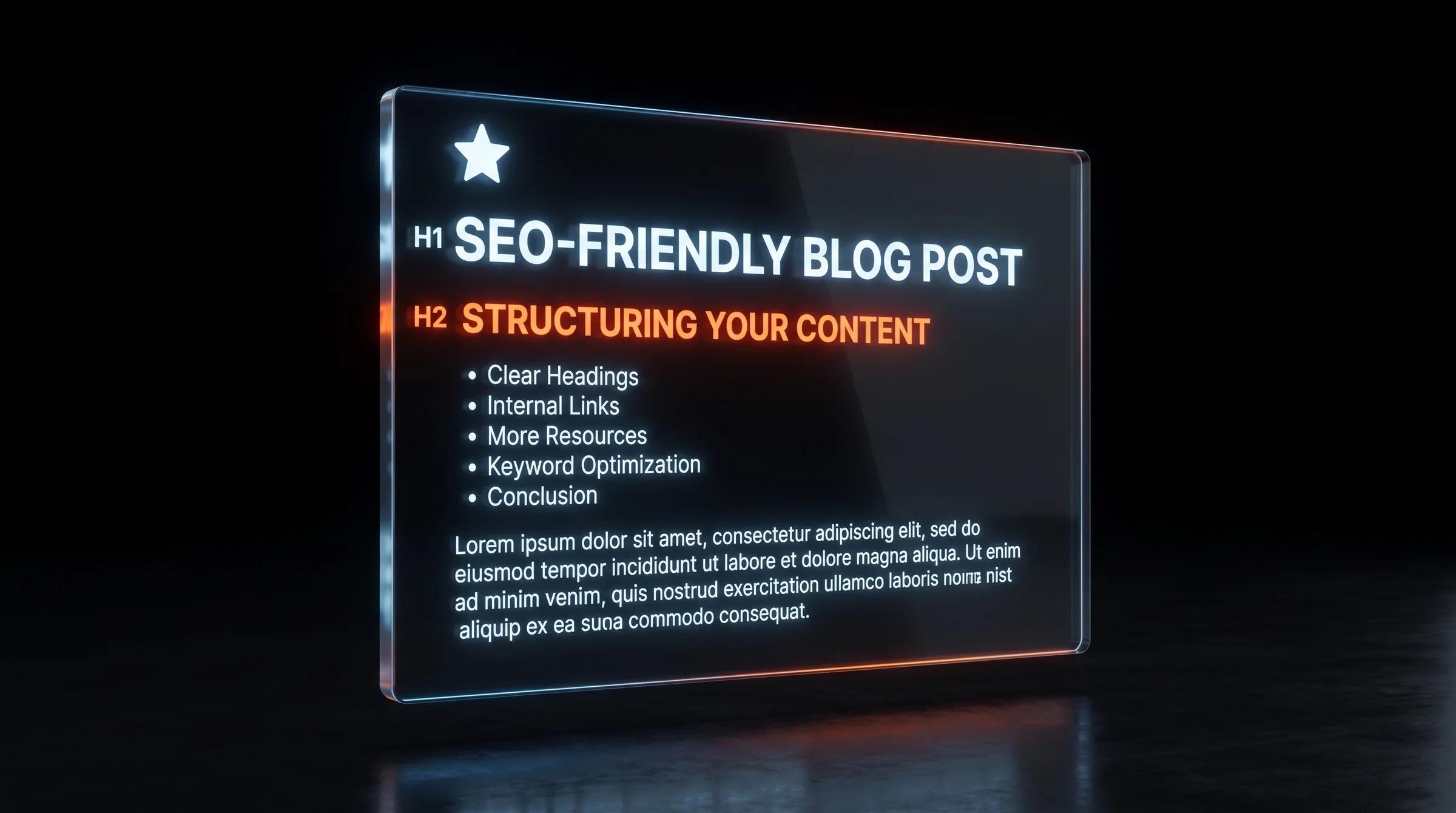
- Are H2 headings phrased as questions the reader would actually type? Not marketing speak, but natural language.
- Does the post include at least 3 internal links to topically related content? Internal linking builds topical authority. Yoast’s 2026 guidance confirms it remains one of the most effective ways to signal content depth to both search engines and AI crawlers (Source).
- Is there a visible publication date and “last updated” date? Freshness signals matter for both Google and AI engines. The March 2026 core update tightened recency requirements further.
For AI citation:
- Does every H2 section open with a direct, complete answer in the first 1-2 sentences?
- Are at least 3 H2 or H3 headings phrased as questions matching how people ask AI assistants? Think “What is X?” or “How does Y work?” rather than “The Power of Y.”
- Does the post contain at least 3 named statistics with linked sources?
- Does the post include at least 1 definition formatted as bold term + plain-English explanation in the same sentence?
- Can each key sentence be extracted and still make complete sense without the surrounding paragraph?
- Does the post include an FAQ section? FAQ sections create self-contained Q&A pairs that are ideal for AI extraction. While Google removed FAQ rich results in early 2025, the structural format itself remains one of the highest-performing patterns for AI citation because each pair is extractable as a standalone answer (Source).
That last point is worth repeating because it’s the single biggest change I’ve made to my writing. AI engines don’t read your blog post the way a human does - linearly, building context as they go. They extract passages. If your passage needs the previous paragraph to make sense, the AI will skip it for a competitor’s passage that doesn’t.
The Mistakes I Made (So You Don’t Have To)
Writing about what worked is easy. Talking about what didn’t is more useful.
Mistake #1: Over-optimizing headings for AI at the expense of readability. I went through a phase where every single H2 and H3 was phrased as a question. “What is keyword research?” “Why does internal linking matter?” “How do you write a meta description?” It read like an FAQ page, not an article. The fix: mix question headings with declarative ones. Use questions for informational subtopics and statements for opinionated or action-oriented sections.
Mistake #2: Stuffing every section with stats. After learning about the 40% visibility boost from statistics, I tried to cram a data point into every paragraph. It killed the voice of the post. The content read like a research paper, not a blog. Now I aim for one strong stat per H2 section, two max. Quality and placement beat quantity. AirOps research backs this up: early-discovery content with five to seven statistics earns measurably higher citation likelihood, but beyond that threshold, returns diminish (Source).
Mistake #3: Assuming one structure works for all AI platforms. I wasted weeks early on trying to find one format that optimized for Google, ChatGPT, Perplexity, and Claude equally. Growth Memo’s finding that only 2% of URLs appear across all major AI platforms confirmed what I was seeing: different engines have different retrieval patterns. The practical fix: optimize primarily for Google and AI Overviews (since they share the most overlap - BrightEdge confirms roughly 54% citation overlap with organic rankings), then audit a few high-value posts specifically for ChatGPT and Perplexity citation patterns.
Mistake #4: Ignoring the FAQ section. I used to think FAQ sections at the bottom of posts were lazy. Turns out they’re one of the highest-performing structures for AI citation because each Q&A pair is a self-contained, extractable unit. Position Digital’s analysis of 150+ AI SEO statistics confirmed that structured content - headings, lists, FAQ - is the most effective format for AI search, while dense paragraphs perform worst. I add FAQ sections to every informational and how-to post now.
What Content Experts Are Saying About Writing for Dual Discovery in 2026
The conversation among practitioners has shifted meaningfully since 2025. Chelsea Alves, Senior Manager of Content Marketing at PG Forsta, put it well in a Search Engine Journal expert roundup (Source):
“Topical relevance is more important than ever, as well as schema-informed structure… It’s about creating a layered content experience: a clear, structured skeleton for the machines and a compelling, emotive experience for the humans.”
- Chelsea Alves, Senior Manager, Content Marketing, PG Forsta
That phrase “layered content experience” nails it. You’re not choosing between writing for humans and writing for machines. You’re building content that works on both layers simultaneously. The structured skeleton - headings, definitions, self-contained answers - serves the machines. The voice, stories, and opinions serve the humans. Neither layer works without the other.
Andy Betts, a CMO advisor quoted in the same piece, captured the shift in how writers need to think about their role: “I shifted from tactical content to strategic content that builds authenticity for AI citations and references.” That’s the career-level implication of everything in this post. Writers who think of themselves as sentence-assemblers will be replaced. Writers who think of themselves as strategic architects of discoverable expertise will be in demand.
The dual skill set - writing with voice while structuring with precision - isn’t optional anymore. It’s the baseline.
Frequently Asked Questions About Writing SEO-Friendly Blog Posts
How long should an SEO-friendly blog post be?
There’s no magic word count. Backlinko’s analysis of 11.8 million Google search results found the average first-page result contains about 1,500 words, and Yoast’s 2026 guidance confirms similar benchmarks. But length alone doesn’t cause rankings. Write enough to fully answer the reader’s question with genuine depth, and stop. Padding a post to hit 2,000 words when 1,200 words covers the topic thoroughly will hurt engagement metrics and dilute your Information Gain score. For AI citation specifically, shorter, denser sections within longer posts outperform uniformly long-winded writing.
Do I need to optimize separately for Google and AI answer engines?
Not entirely separately, but you do need intentional awareness of both. About 70% of what Google rewards - clear structure, authority signals, fresh content, topical depth - also helps with AI citations. The remaining 30% - self-contained sentences, front-loaded evidence, question-phrased headings - requires deliberate adjustments. The dual-optimization framework in this post gives you a concrete way to cover both without duplicating effort.
What’s the fastest way to check if my blog post is citation-ready for AI engines?
Copy the first two sentences from each H2 section and read them in isolation. If they make a complete, accurate, factually verifiable statement without needing context from the rest of the section, that section is citation-ready. If they require the reader to have read the previous paragraph to make sense, rewrite them. This 10-minute test catches most AI-citation problems before they happen.
Does schema markup actually matter for blog posts in 2026?
It matters, but differently than it did. Google removed FAQ rich results in early 2025, and Position Digital’s extensive research roundup found that schema markup no longer produces a major uplift in AI citations by itself. What still matters: the structural clarity that schema encourages. Posts organized around clear question-answer pairs, logical heading hierarchies, and self-contained content sections get cited more often - not because of the schema tags themselves, but because the structure makes extraction trivially easy for AI systems. Use schema, but don’t rely on it as a shortcut.
Should I add an FAQ section to every blog post?
For informational and how-to posts, yes. FAQ sections create self-contained question-and-answer pairs that are ideal for AI extraction. For opinion pieces or news commentary, an FAQ often feels forced. Use your judgment based on whether readers would genuinely have follow-up questions that a short FAQ could answer better than the body content already does. The format itself - one clear question, one self-contained answer - is what AI engines respond to, not the label “FAQ” at the top of the section.
The Bottom Line: Write for Humans, Structure for Machines
Everything I’ve laid out here boils down to one principle. Your voice, your opinions, your stories, and your experience are what make a reader finish the article. Your structure, your evidence placement, your self-contained sentences, and your refusal to bury your best data are what make machines find it, trust it, and cite it.
Neither side of that equation works alone anymore. A beautifully written post with sloppy structure won’t get cited. A perfectly structured post with no personality won’t get read - or linked to, which means it won’t rank either. And in 2026, with Information Gain as a confirmed dominant signal and AI Overviews triggering on nearly half of all searches, the posts that win are the ones that do both things at once.
The practical moves: start with the Citation-Ready Section framework for your next blog post. Front-load your evidence. Make every key sentence extractable. Add an FAQ section. Update your highest-traffic posts quarterly - recency bias is confirmed across every major AI model now. And above all, add something to the conversation that the other ten articles on page one don’t say. Google’s Information Gain system and AI engines both reward the same thing: content that earns its right to exist by being genuinely, demonstrably different from everything else out there.
If building this kind of dual-optimized content sounds like more than your team can handle in-house, LoudScale helps brands create blog content that ranks on Google and gets cited by AI answer engines, using the same frameworks covered in this post.
The search game has split into two lanes. The bloggers who adapt to both will own the next five years. The ones still writing like it’s 2022 will wonder where their traffic went.
Sources
- BrightEdge (February 2026). AI Overviews at the One-Year Mark: Presence, Size, and Citing. https://www.brightedge.com/resources/weekly-ai-search-insights/ai-overviews-one-year-presence-size-citing
- Growth Memo (February 2026). The Science of How AI Pays Attention. https://www.growth-memo.com/p/the-science-of-how-ai-pays-attention
- Aggarwal, P. et al. (2024). GEO: Generative Engine Optimization. arXiv:2311.09735. https://arxiv.org/pdf/2311.09735
- Digital Applied (April 2026). Information Gain: Google’s #1 Ranking Signal in 2026. https://www.digitalapplied.com/blog/information-gain-google-ranking-signal-april-2026
- Growth Memo (May 2026). The Consensus Gap. https://www.growth-memo.com/p/the-consensus-gap
- AirOps (2025). AEO Scorecard Report. https://www.airops.com/report/aeo-scorecard-report
- AirOps (April 2026). From Retrieved to Cited: How Commercial Content Earns Citations in AI Search. https://www.airops.com/report/from-retrieved-to-cited-how-commercial-content-earns-citations-in-ai-search
- Otterly (February 2026). The AI Citation Economy: What 1+ Million Data Points Reveal. https://otterly.ai/blog/the-ai-citations-report-2026/
- Yesilyurt, M. (October 2025). The Recency Bias That’s Reshaping AI Search. https://metehan.ai/blog/i-found-it-in-the-code-science-proved-it-in-the-lab-the-recency-bias-thats-reshaping-ai-search/
- Yoast (February 2026). Tips and Tricks to Write SEO-Friendly Blog Posts in the AI Era. https://yoast.com/seo-friendly-blog-post/
- Position Digital (May 2026). 150+ AI SEO Statistics for 2026. https://www.position.digital/blog/ai-seo-statistics/
- Search Engine Journal (January 2026). 16 Content Writing Tips From Experts To Survive 2026. https://www.searchenginejournal.com/content-writing-tips-from-experts/477016/
- Forrester (November 2025). How To Master Answer Engine Optimization. https://www.forrester.com/blogs/how-to-master-answer-engine-optimization/
- Backlinko. Search Engine Ranking Factors. https://backlinko.com/search-engine-ranking
- Conductor (March 2026). Meta Description: The Ultimate Reference Guide. https://www.conductor.com/academy/meta-description/
- HubSpot (May 2026). Answer Engine Optimization Trends in 2026. https://blog.hubspot.com/marketing/answer-engine-optimization-trends
- AI Visibility ReadinessScore AI Visibility Readiness (not live mentions) free.
- SEO CheckerLive on-page extractability, schema, and trust checks.
- Website Growth GraderFull growth diagnostic across SEO and positioning.
Diagnostics show a useful score before email. Explore LoudScale services when you want a full plan and implementation.

LoudScale Team
Growth Marketing Specialists
The LoudScale team shares practical strategies and experiments across search and AI visibility, content authority, B2B lead generation, lifecycle systems, analytics, and responsible AI.