TL;DR
- SEO isn’t dead, but the “write a 1,200-word explainer, buy five backlinks, watch it rank” version is clinically dead. Ahrefs found AI Overviews now reduce position-one click-through rates by 58% for queries where they appear. On informational searches, Seer Interactive clocked a 61% organic CTR crash.
- The averages lie. Graphite’s study of 40,000+ sites showed total organic traffic dipped just 2.5%. But dig one layer down: news, health, and informational publishers got hammered. E-commerce, marketplace, and bottom-funnel brands grew. The aggregate number masks a brutal redistribution.
- Billions are still pouring in. The global SEO services market hit $108.28 billion in 2026, growing at 17.1% CAGR. Nobody bets $108B on a dead channel. The money’s just moving to different tactics.
- The winning play in 2026 is treating SEO, AEO (Answer Engine Optimization), and GEO (Generative Engine Optimization) as one connected discipline. If your content isn’t optimized to get cited in ChatGPT, Perplexity, Claude, and Google AI Overviews, you’re invisible on the surfaces where buying decisions increasingly start.
- Google just told us the future at I/O 2026: “Google Search is AI Search.” The company officially declared the end of the traditional search era. That’s not a prediction. That’s the company that controls 89.3% of global search telling you what’s happening right now.
Every December, someone publishes a “SEO is dead” post. It gets retweeted. SEOs get angry. The newsletter economy gets its engagement bump. And by February, everyone’s back to writing meta descriptions. This year feels different. And it should.
Three things changed the game permanently between January and May 2026. First, Ahrefs updated its AI Overviews study and found the CTR impact jumped from 34.5% to 58%. Google now keeps 58 of every 100 clicks that used to go to the top-ranking page. Second, ChatGPT hit 900 million weekly active users, now handling roughly 12% of Google’s search query volume, per Ahrefs’ analysis. Third, Google’s Liz Reid announced at I/O 2026 that AI Mode surpassed one billion monthly users and the intelligent AI-powered search box - “the biggest upgrade in over 25 years” - is rolling out globally.
These three data points don’t reconcile cleanly. That’s why “Is SEO dead?” has become the single most misleading framing in marketing.
The data is screaming two opposite things at once
Here’s the contradiction.
Ahrefs says -58% CTR for position one. Seer Interactive says -61% organic CTR for AI Overview queries. Define Media Group found organic clicks down 42% across 64 sites. Datos/SparkToro documented a nearly 20% decline in Google searches per U.S. user. Zero-click searches sit between 58.5% and 64.8% of all U.S. Google queries.
But on the other side: SEO services are a $108.28 billion industry in 2026, growing 17.1% annually. 91% of marketers report positive ROI from SEO. SEO leads close at 14.6% vs. 1.7% for outbound. Google handles 8.5 billion searches daily at 89.3% global market share, per StatCounter. And Google still sends 190x more traffic to websites than ChatGPT.
How can both be true? They’re measuring different things. CTR and traffic decline studies measure traditional organic blue links. Industry growth measures total search visibility - now spanning Google, AI Overviews, ChatGPT, Perplexity, Claude, Bing with Copilot. SEO didn’t shrink. It fragmented. The money followed.
The SEO Triage Framework: What’s dead, what’s dying, what’s winning
The biggest mistake I see marketers make in 2026 is treating all SEO content as one bucket. Here’s the framework I’ve been using across D2C, SaaS, and publishing clients.
| Category | Signal | Examples |
|---|---|---|
| Dead | ROI near zero. Pull the plug. | Thin definition pages, “what is X” explainers with zero original insight, keyword-stuffed FAQ sections, programmatic content-at-scale without expert authorship |
| Dying | Still produces but declining 10-30% YoY. Reduce. | Generic “best X” listicles without original testing, informational posts targeting head terms, guest-post-farm link building |
| Thriving | Equal or better ROI than 2024. Double down. | Bottom-funnel comparison/pricing pages, original research and survey data, named-expert thought leadership, topical authority clusters with unique data, technical SEO for e-commerce, brand-building content AI models cite |
Dead: AI Overviews already swallowed this content type
If your page answers a question that Google’s AI Overview can answer in two sentences without leaving the search results page, that page is dead. Not dying. Dead.
AI Overviews appeared on 13% of queries during the 2025 rollout. That figure hit roughly 28% of U.S. queries by March 2026, per Digital Applied’s tracking, with a trajectory toward 30-40% by year-end. Every percentage point they expand, thin informational pages lose more clicks.
I watched a B2B SaaS client’s 40 glossary pages lose 63% of organic sessions between June and December 2025. Same domain. Same technical foundation. The bottom-funnel comparison and pricing pages went up 11%.
Dying: Generic listicles and guest-post link building
“Best project management tools 2026” still generates clicks. For now. But when I ask Perplexity for tool recommendations, I get a personalized answer in ten seconds - no scrolling past pop-ups, no skimming SEO introductions, no wondering if the author tested the tenth tool.
If your listicle has original testing data, screenshots, and an actual opinion, it survives. If it’s a rewrite of five other listicles, start planning its retirement.
Guest-post link building has the same terminal diagnosis. AI-generated content now appears in over 17% of top Google results, and nearly half of all online articles are AI-generated. Google’s systems identify and ignore synthetic content churn. A guest post on a domain with zero real audience adds nothing to your AI citation profile.
Thriving: Original research, expert voice, and bottom-funnel pages
This is the section that should change your budget. The content types AI cannot synthesize from existing sources are the same content humans click when ready to act: original research, hands-on product comparisons, content tied to a named expert with credentials, technical guides with proprietary methodology, bottom-funnel transactional pages.
Here’s the irony: the same AI systems “killing” traditional SEO need your content as citation material. Seer Interactive found brands cited within AI Overviews earned 35% more organic clicks than brands not cited. Getting cited doesn’t just offset the CTR decline - it can invert it.
The three surfaces you need to show up on in 2026
SEO in 2026 isn’t one channel. It’s three. And they work differently.
-
Classic Google organic (89.3% of search market). Still your biggest traffic driver by an enormous margin. Google sends 190x more referral traffic than ChatGPT. But the click surface inside Google has shrunk because AI Overviews sit above the organic results on roughly 28% of U.S. queries. You’re not ranking for the same real estate anymore.
-
Google AI Mode / AI Overviews. At I/O 2026, Google announced AI Mode surpassed one billion monthly users, now powered by Gemini 3.5 Flash with agents and personal intelligence features rolling out globally. This is no longer an experiment. Getting cited here captures clicks that would otherwise vanish into zero-click oblivion.
-
Standalone AI engines (ChatGPT, Perplexity, Claude, Gemini). These platforms collectively sent 0.9% of all referral traffic in March 2026 - 5x year-over-year. That’s small. But ChatGPT-referred traffic converts at 16% versus Google Organic’s 1.8%. AI search visitors arrive pre-qualified.
McKinsey projects AI-powered search will influence $750 billion in U.S. consumer spending by 2028, with 50% of consumers already using it. If you aren’t tracking your brand’s visibility in ChatGPT, Perplexity, and Claude, you’re flying blind on the fastest-growing search surface in history.
A practical playbook for SEO that works right now
Here’s what I’d do if I were starting from scratch today.
-
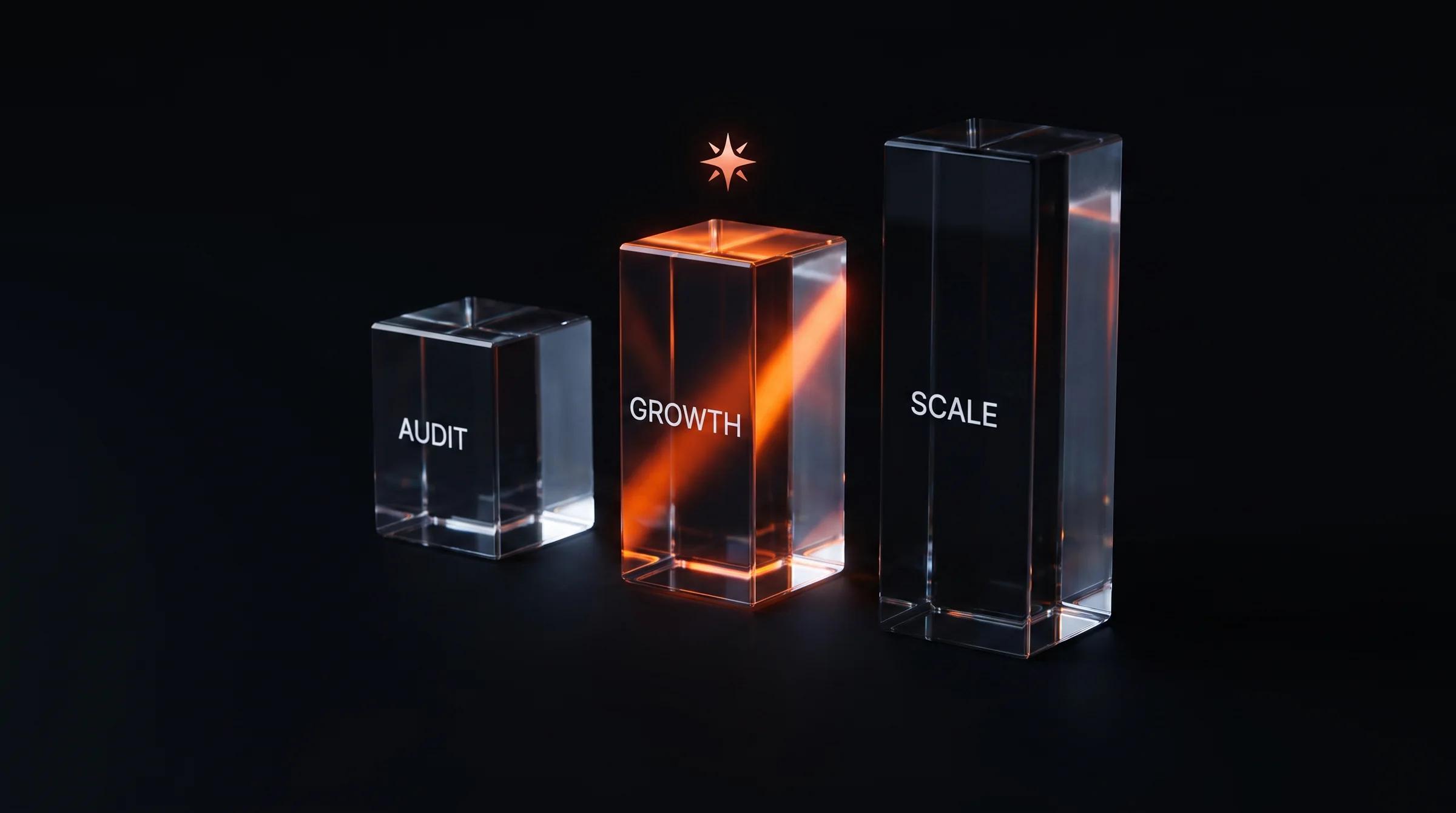
Audit your top 100 pages through the Triage Framework. Sort every page into Dead, Dying, or Thriving. For Dead pages, merge salvageable value into a Thriving page and cut the rest. Google’s Helpful Content System rewards sites that prune. Carrying dead weight hurts everything else.
-
Flip your content mix. If 70% of your content budget goes to informational blog posts, reverse it. Original research, expert commentary with named authors, comparison content based on real testing, and bottom-funnel transactional pages should dominate.
-
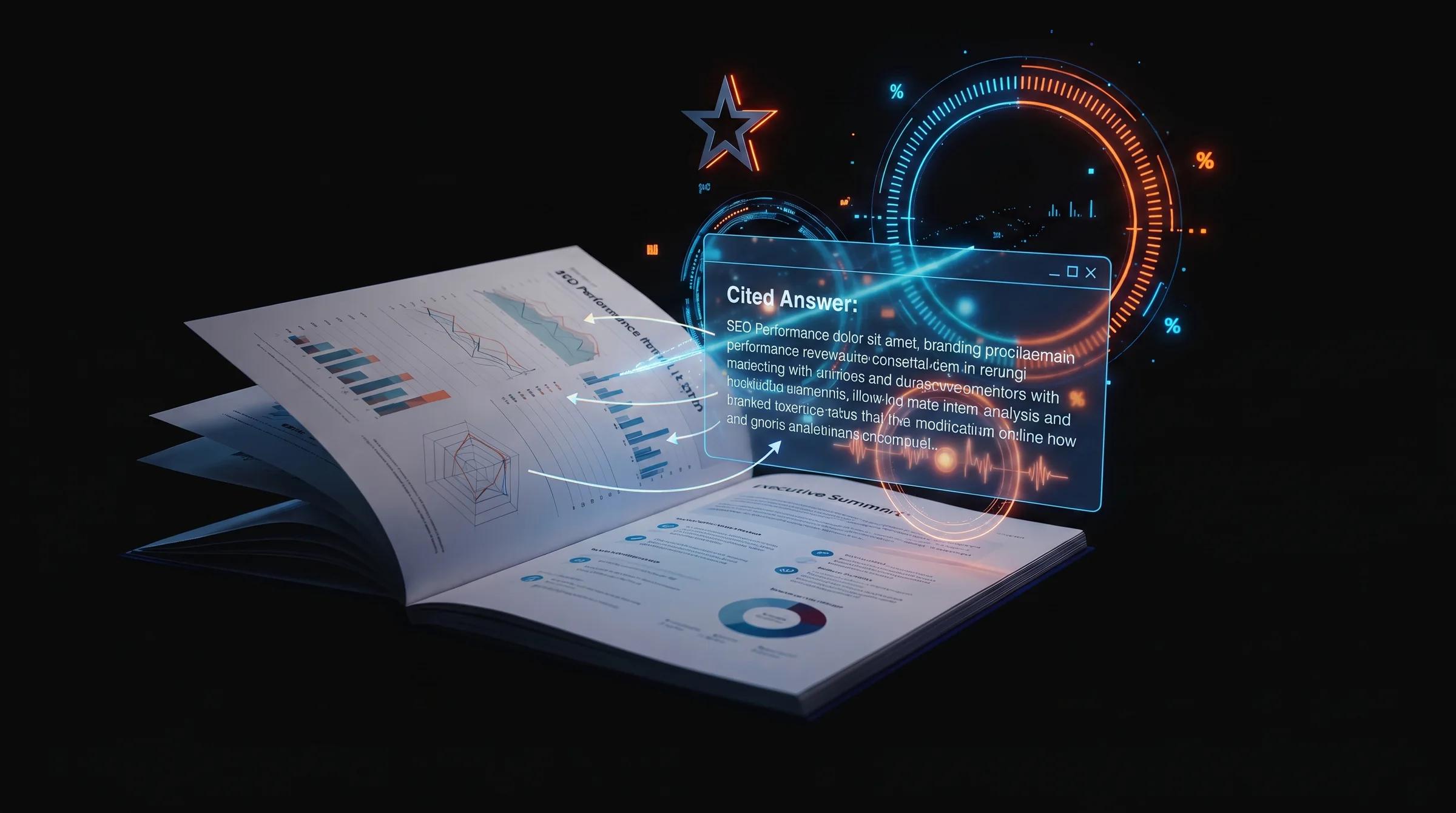
Build for AI citation, not just SERP ranking. Clear definitions. Named expert attribution. Original data citations. Self-contained statements that make sense when pulled out of context. Structured data markup (Article, FAQ, Product schema). Generative Engine Optimization (GEO) and Answer Engine Optimization (AEO) are the operational playbooks for getting cited by AI search surfaces.
-
Earn brand mentions everywhere, not just backlinks. AI models count contextual brand mentions across the open web. Getting your CEO quoted in a trade publication, your data cited in a competitor’s blog, your brand discussed on Reddit - these are the “links” that drive AI visibility in 2026. Moz’s 2026 Whiteboard Friday explicitly recommends building entity clusters and evolving reporting beyond traffic.
-
Track AI visibility as a KPI. Add brand mention tracking in ChatGPT, Perplexity, Claude, and Gemini to your reporting. Monitor AI Overview citation rates alongside organic CTR. The tools exist now.
The $108 billion question
If SEO were dying, the global SEO services market wouldn’t be worth $108 billion and growing at 17% CAGR. Companies don’t throw that kind of money at dead channels. They redirect it.
What’s happening is a reallocation - away from mass content production, toward technical SEO for large sites, original content creation, AI citation, and CRO. The pie is growing. The slices have shifted.
The version of SEO that died in 2025 wasn’t SEO. It was a content treadmill. The version thriving in 2026 is what’s always worked: make something genuinely worth finding, build real authority, and adapt faster than the platforms change.
[INTERNAL LINK: SEO Services] | [INTERNAL LINK: Generative Engine Optimization Guide] | [INTERNAL LINK: SEO ROI Calculator] | [INTERNAL LINK: AI Search Visibility Audit]
If you’d rather have a team own the strategy, execution, and measurement across SEO, AEO, and GEO simultaneously, LoudScale handles exactly that - cross-channel search visibility for brands that need results, not lectures.
Frequently Asked Questions About SEO in 2026
Is SEO still worth investing in for 2026?
Yes, but only specific types. The global SEO services market reached $108.28 billion in 2026, growing 17.1% year-over-year. SEO leads close at 14.6% versus 1.7% for outbound. The catch: thin informational content and generic listicles are losing ROI fast. Expert-driven, data-backed, and bottom-funnel content is the investment that pays.
How much do AI Overviews hurt organic click-through rates?
Dramatically on affected queries. Ahrefs’ February 2026 study found 58% lower CTR for position one on AI Overview queries. Seer Interactive recorded a 61% organic CTR drop. Define Media Group showed 42% fewer clicks. But AI Overviews appear on roughly 28% of U.S. queries, primarily informational. Transactional and brand searches are far less affected. And brands cited within AI Overviews earn 35% more organic clicks.
Are AI tools like ChatGPT and Perplexity replacing Google?
Not yet, and the gap is massive. Google processes 8.5 billion searches daily and sends 190x more website traffic than ChatGPT. ChatGPT handles roughly 12% of Google’s search query volume, but its CTR is 96% lower. However, AI search referrals grew 5x year-over-year, and conversion rates on AI-referred traffic are significantly higher. The platforms complement each other more than they compete - for now.
What is GEO and how does it fit into SEO in 2026?
Generative Engine Optimization (GEO) is the practice of optimizing content to be cited by AI-powered systems - ChatGPT, Perplexity, Google AI Overviews, Claude, and Gemini. It builds on traditional SEO but adds AI-specific layers: structured data for entity recognition, citation-friendly factual writing, named expert attribution, brand mentions across external surfaces, and llms.txt configuration. GEO is the next layer on top of SEO, not a replacement.
What type of content actually ranks in 2026?
Content that provides information gain - original data, unique methodology, expert perspective, or hands-on testing. Graphite’s analysis of 40,000+ websites found e-commerce, shopping, and marketplace content grew while informational categories like news and health declined over 10%. Bottom-funnel comparison pages, original research, expert thought leadership, and AI-citation-worthy content are the strongest performers.
Sources
- Ahrefs - Update: AI Overviews Reduce Clicks by 58% (February 2026)
- Ahrefs - ChatGPT Has 12% of Google’s Search Volume, Google Sends 190x More Traffic (February 2026)
- Search Engine Land - Google Searches Per U.S. User Fell Nearly 20% YoY (January 2026)
- Search Engine Land - Google AI Overviews Cut Search Clicks 42% (March 2026)
- Search Engine Land - ChatGPT Has 900 Million Weekly Active Users (February 2026)
- Seer Interactive - AIO Impact on Google CTR: September 2025 Update (November 2025)
- Google Blog - A New Era for AI Search (I/O 2026) (May 2026)
- StatCounter - Search Engine Market Share (March/April 2026)
- Digital Applied - Search Engine Market Share 2026: Global Data Report (April 2026)
- McKinsey - New Front Door to the Internet: Winning in the Age of AI Search (October 2025)
- Graphite - Debunking the Myth That SEO Traffic Has Dramatically Declined
- The Business Research Company - SEO Services Global Market Report 2026
- AI Visibility ReadinessScore AI Visibility Readiness (not live mentions) free.
- SEO CheckerLive on-page extractability, schema, and trust checks.
- Website Growth GraderFull growth diagnostic across SEO and positioning.
Diagnostics show a useful score before email. Explore LoudScale services when you want a full plan and implementation.

LoudScale Team
Growth Marketing Specialists
The LoudScale team shares practical strategies and experiments across search and AI visibility, content authority, B2B lead generation, lifecycle systems, analytics, and responsible AI.