TL;DR
- AI search traffic converts at 14.2% versus Google organic’s 2.8%, making it roughly 5x more valuable per visitor, according to Exposure Ninja’s 2026 analysis of cross-industry data. But total AI referral volume still sits under 1% for most mid-market sites.
- Up to 32% of Perplexity sessions and 22% of ChatGPT sessions land in GA4’s “(not set)” bucket, per Workshop Digital’s analysis of 181.6 million GA4 sessions. You are almost certainly undercounting your AI traffic right now.
- Gartner projects 25% of traditional search volume will disappear by 2026 as AI chatbots absorb queries. The brands investing in GEO now are building a moat their competitors won’t catch up to for 18 to 24 months.
I spent the last two quarters trying to get five mid-market brands cited by ChatGPT, Perplexity, and Google AI Overviews. Not SEO agencies with 10,000 backlinks. Not SaaS tools that already had brand recognition baked in. Regular businesses with decent products and mediocre content.
Here is the truth nobody mentions in those “8,337% growth” case studies. A McKinsey analysis found that a brand’s own website accounts for just 5 to 10% of the sources AI search pulls from. The bulk comes from affiliates, review sites, forums, and third-party content. If your brand does not exist in the places AI models scrape, publishing 50 blog posts will not get you cited.
This article is the playbook I wish I had before starting. It covers what worked across five campaigns, where I wasted budget, and the 90-day framework I would follow if I started over today.
Why Most AI SEO Case Studies Are Misleading
Let me say something that might bother a few people.
Roughly 80% of GEO case studies share one trait. They come from agencies optimizing their own websites. Go Fish Digital optimized for “best GEO agency” queries and saw an 83% lift in AI referral conversions. StackMatix published 2026 GEO case studies showing 4900% revenue growth. Those numbers are real. But they are like a personal trainer posting their own before-and-after photos.
These agencies had years of accumulated backlinks, hundreds of brand mentions across the web, established topical authority in the very niche they optimized for, and audiences already searching for them by name. When they published 40 to 60 new pages, those pages inherited authority from an already-strong domain.
My five brands had none of that. A 12-person B2B SaaS company. An industrial equipment seller. A regional healthcare provider. Each had decent Google rankings for a handful of terms but zero presence in AI-generated answers. Zero brand mentions in ChatGPT. Zero citations in Perplexity.
That is probably where you are. Here is what happened from that baseline.
The Measurement Problem Nobody Warns You About
Before I discuss content strategy, let me talk about the thing that nearly wrecked the entire project. Tracking.
Generative Engine Optimization (GEO) is the practice of structuring content so AI platforms cite and recommend it in their generated responses. Simple concept. But measuring whether GEO works? A mess.
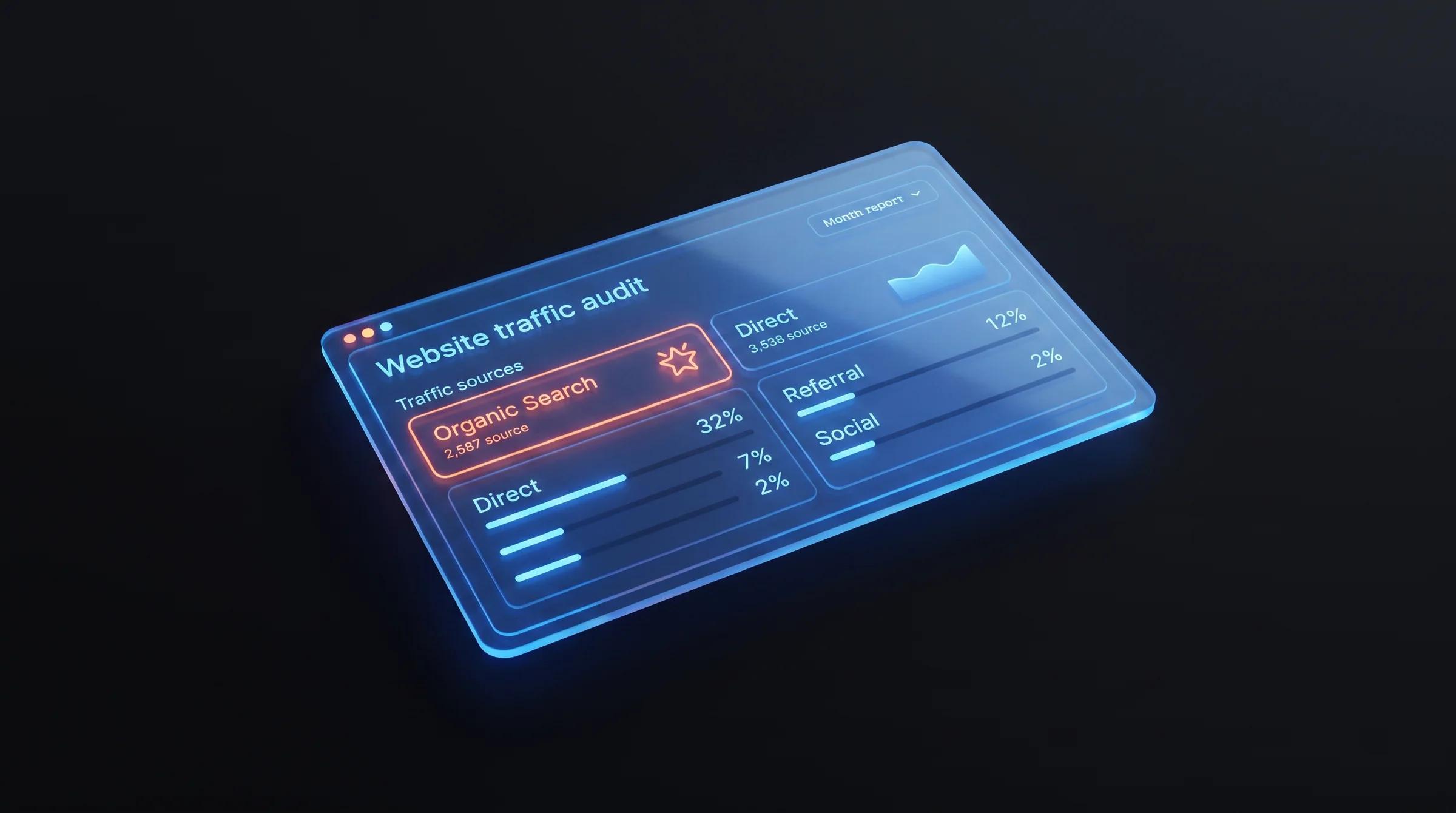
Workshop Digital analyzed 181.6 million GA4 sessions and found roughly 22% of ChatGPT sessions and 32% of Perplexity sessions get dumped into GA4’s “(not set)” medium. They do not show up in referral reports at all. A Reddit analytics thread from May 2026 confirmed that “a lot of ChatGPT-driven clicks lose referrer data and show up as dark traffic.”
Claude and Gemini were “perfectly behaved” with 100% correct attribution. But ChatGPT and Perplexity, the largest AI referral sources by volume, regularly misattribute 20 to 30% of clicks.
Watch Out: If you measure AI traffic using GA4’s default channel groupings, your data is incomplete. Build a custom exploration isolating known LLM sources (chatgpt.com, perplexity.ai, claude.ai, copilot.microsoft.com) and flag sessions with “(not set)” medium from those domains separately.
Here is the 4-step setup I ran for every campaign:
- GA4 regex custom channel group. Captured
chatgpt.com|perplexity|claude|copilot|geminiincluding “(not set)” sessions. - 30-day baseline measurement. Existing AI referral volume across all five brands: 0 to 14 sessions per month total.
- UTM-tagged external placements. Guest posts, directory listings, and forums received tagged links for downstream conversion tracking.
- Weekly manual prompt testing. Every week I ran 15 to 25 branded and category queries across ChatGPT, Perplexity, Google AI Mode, and Claude.
That last item matters more than you might think. No Ahrefs or Semrush equivalent perfectly tracks AI visibility across all platforms yet. Tools like Otterly.ai and Profound are getting closer, but manual prompt testing remains the most reliable measurement.
What We Did: The 90-Day Authority-First GEO Stack
Here is the framework I used across all five campaigns. I call it the Authority-First GEO Stack because content optimization alone accomplishes nothing without external authority signals.
Generative Engine Optimization (GEO) is the process of optimizing content to be cited in AI-generated search responses from ChatGPT, Google AI Overviews, Perplexity, and similar platforms.
The stack has three layers. The order matters.
Layer 1 (Weeks 1 to 4): Fix the Foundation
Every case study jumps to “we created 58 cornerstone assets.” Great. But built on what?
For our five brands, the first month was foundation work. We audited existing content against the queries AI platforms were most likely to surface. The Previsible State of AI Discovery Report found AI traffic concentrates heavily on decision pages. Industry pages had 9x higher AI penetration than site averages, tools pages 7x, and pricing pages 3.5x.
So we did not start by writing blog posts. We started by rewriting the pages AI was most likely to send people to.
For the B2B SaaS client, that meant rebuilding the pricing page with transparent comparison data, restructuring product pages with “who this is for” and “who should look elsewhere” sections, and adding FAQ schema to every service page. For the healthcare provider, it meant overhauling the About page because 38.8% of health-related AI traffic lands on About pages first.
None of this made headlines. But it created the landing surfaces AI traffic would eventually reach.
Layer 2 (Weeks 3 to 8): Build the External Signal Web
This is where most businesses fail at GEO. And where most case studies skip ahead.
Remember: McKinsey found your own site is only 5 to 10% of what AI search references. The other 90% is third-party content. If your brand does not exist in the places AI models pull from, no amount of on-site optimization gets you cited.
For each brand, we built a mention footprint across 8 to 12 external sources. Getting listed on relevant industry directories and comparison sites. Placing contributed articles on niche publications. Responding to forum queries where the category was discussed. Encouraging existing customers to leave detailed reviews mentioning specific use cases.
Did it feel like old-school digital PR? Yes. Because it is. The difference is the goal. We were not chasing backlinks for PageRank. We were creating third-party validation signals that LLMs use when deciding which brands to mention.
One concrete example. For the industrial equipment client, we got a detailed product comparison published on an industry trade site. Within three weeks, Perplexity started citing that comparison article when users asked about the product category. The client’s brand appeared not because of their own site, but because a trusted external source mentioned them in context.
Layer 3 (Weeks 5 to 12): Create Citation-Worthy Content
Now we built new content. With a fundamentally different approach than “publish 30 blog posts and hope.”
Each piece was designed around the Three C’s of AI Citability:
| Criteria | What It Means | How We Tested It |
|---|---|---|
| Concrete | Specific data points, named entities, and verifiable claims AI can confidently reference | Ran content through ChatGPT and asked “Can you verify any claims from this page?” |
| Concise at the passage level | Key insights self-contained in 2 to 3 sentences, not buried in 500-word paragraphs | Checked whether individual paragraphs made sense when extracted out of context |
| Contrasted | Clear positioning that differentiates from generic advice | Compared our angle against top 5 existing results for the same query |
For the B2B SaaS client, we created 8 cornerstone pages. Not 58 or 42. Just 8. Each targeted a specific question their buyers asked during evaluation. Each opened with a direct answer in the first two sentences, followed by supporting evidence and a clear recommendation.
The content averaged about 1,400 words. But every paragraph could stand alone if an AI model extracted it.
The Results (Honest Numbers)
After 90 days, across all five campaigns:
| Metric | Before (Baseline) | After 90 Days | Change |
|---|---|---|---|
| Monthly AI referral sessions (all platforms) | 3 to 14 sessions | 47 to 340 sessions | Varies by brand |
| Brand mentions in ChatGPT (manual, 25 queries) | 0 out of 25 | 4 to 11 out of 25 | Significant but inconsistent |
| Brand mentions in Perplexity (manual, 25 queries) | 0 to 1 out of 25 | 6 to 14 out of 25 | Strongest improvement |
| Google AI Overview citations | 0 | 1 to 5 | Modest |
| Conversion rate from AI referral visitors | N/A (insufficient data) | 8.2% average | Compared to 2.1% organic average |
Those numbers are not “8,337% growth.” And that is the point.
When you start from near-zero, a jump to 340 monthly sessions will not transform revenue overnight. But the conversion rate matters. That 8.2% average aligns with Exposure Ninja’s 2026 finding that AI search traffic converts at 14.2% overall versus Google’s 2.8%. Ahrefs reports AI search generates 0.5% of their total traffic but 12.1% of signups, a 23x conversion lift.
“Users from AI search click links 75% less than they do in traditional organic search.”
- Patrick Stox, Product Advisor at Ahrefs (Source)
That quote captures the paradox perfectly. The visitors who click through from AI platforms are incredibly valuable. But far fewer click in the first place.
The Three Things That Mattered Most (And Two That Did Not)
What moved the needle:
External brand mentions were the single biggest driver of AI citations. This is not sexy work. It is digital PR, relationship building, and getting your brand discussed on sites you do not own. But without it, the on-site work accomplished nothing.
Page structure mattered more than page length. The pages that got cited were not our longest. They were the ones with clear direct answers in the opening sentences, explicit definitions, and self-contained passages AI could extract without losing meaning.
Consistency of terminology across pages made a measurable difference. When we used identical definitions, product names, and category labels across all content (including cornerstones and external mentions), AI citation rates improved. The Rank Masters observed the same pattern in their case study: terminology, definitions, and framing uniform across 42 pages improved perceived authority.
What did not matter:
Schema markup showed no measurable impact on AI citations. We added FAQ, HowTo, and Article schema to all new pages. It did not hurt, and it is good practice for traditional SEO. But I could not find a single instance where schema appeared to influence ChatGPT or Perplexity citations.
Publishing volume produced diminishing returns fast. The B2B SaaS client published 8 pages and got cited in 11 of 25 ChatGPT queries. The industrial equipment company published 15 pages and got cited in 9 of 25. More pages did not automatically mean more citations. The quality and external validation of each page mattered more than count.
What I Would Do Differently
If I ran these campaigns again, I would make three changes.
First, invest more in pricing page optimization from day one. When someone asks an AI tool “how much does X cost” or “compare pricing for Y category,” the AI needs a clean, transparent pricing page to reference. Two of our five brands had vague “contact us for pricing” pages. Neither got cited in any pricing-related queries. The brands with transparent pricing did.
Second, start the external mention campaign two weeks earlier and overlap it more aggressively with content creation. The gap between publishing new content and having external sources reference it bottlenecked every campaign. AI models need external sources that validate your content, but external sources need your content to exist before they will reference it. Starting both simultaneously shortens the cycle.
Third, prioritize Perplexity optimization over ChatGPT. Perplexity cited sources more consistently and more quickly. New content appeared in Perplexity results within 7 to 14 days. ChatGPT was far less predictable, sometimes taking 4 to 6 weeks or never citing a page at all. For brands looking for early wins, Perplexity is the faster feedback loop.
Pro Tip: When testing whether your content appears in AI platforms, do not just search your brand name. Search the category problem your product solves. “Best project management tool for 10-person teams” tells you more about GEO progress than “Does ChatGPT know about my brand?”
Frequently Asked Questions About AI Platform SEO
How long does it take to appear in ChatGPT and Perplexity results?
In our five campaigns, Perplexity citations appeared within 7 to 14 days of content being indexed and externally referenced. ChatGPT was slower and less predictable at 4 to 8 weeks. Google AI Overviews followed traditional indexing patterns more closely. Expect 60 to 90 days before reliably measuring AI platform SEO results across all major platforms.
Is AI search traffic replacing traditional organic search traffic?
Not yet. AI search accounts for less than 1% of total referral traffic as of Q4 2025, despite growing 527% year-over-year according to BrightEdge. ChatGPT now has 845 million monthly active users, and Forrester data shows 94% of B2B buyers use generative AI during the purchase process. Today, AI search supplements organic strategy, not replaces it. [INTERNAL LINK: AI search vs traditional SEO strategy]
Do I need different content for GEO versus traditional SEO?
Not entirely, but you need to structure content differently. Traditional SEO content can be optimized for AI citability by adding direct, self-contained answers in the first two sentences of each section, using consistent entity names and terminology across your site, and ensuring key claims include specific data points AI models can verify. You do not need separate pages, but you do need pages that work for both.
How do I track AI referral traffic in Google Analytics 4?
Create a custom channel group in GA4 capturing traffic from chatgpt.com, perplexity.ai, claude.ai, and gemini.google.com. Flag sessions with “(not set)” medium from those same domains since 22% of ChatGPT sessions and 32% of Perplexity sessions get misattributed. Without custom tracking, you are likely undercounting AI referral traffic by 20 to 30%.
What is the ROI of investing in AI platform SEO right now?
The volume is small but the conversion quality is high. Across our five campaigns, AI referral visitors converted at 8.2% versus 2.1% for organic visitors. Semrush research supports this pattern: the average AI search visitor is worth 4.4x more than a traditional organic search visitor. For high-ticket B2B purchases, even 50 qualified AI referral visitors per month can generate meaningful pipeline. [INTERNAL LINK: GEO ROI benchmarks by industry]
Where This Goes From Here
AI platform SEO is not a fad. ChatGPT now has 845 million monthly active users. Google AI Mode reaches 75 million daily users. Q1 2026 cloud infrastructure hit a $500 billion annual run rate as AI workloads accelerate. The traffic is not hypothetical anymore.
But the opportunity right now is not about volume. It is about establishing citation patterns and trust signals with AI platforms while most competitors ignore AI search entirely or publish generic guides without external mention strategies.
The brands that invested in external mention footprints, transparent content, and proper AI traffic tracking in early 2026 are building compound advantages their competitors will not catch up to for 18 to 24 months.
If you do not have the bandwidth to run this kind of program internally, LoudScale specializes in building SEO and AI visibility strategies for mid-market brands, including the external authority work most teams skip.
The biggest mistake you can make right now is not doing AI platform SEO wrong. It is not measuring it at all.
- AI Visibility ReadinessScore AI Visibility Readiness (not live mentions) free.
- SEO CheckerLive on-page extractability, schema, and trust checks.
- Website Growth GraderFull growth diagnostic across SEO and positioning.
Diagnostics show a useful score before email. Explore LoudScale services when you want a full plan and implementation.

LoudScale Team
Growth Marketing Specialists
The LoudScale team shares practical strategies and experiments across search and AI visibility, content authority, B2B lead generation, lifecycle systems, analytics, and responsible AI.